This May, we humbly ask for your prayers and support for the Lutheran Center for Religious Liberty’s efforts to contend for the freedom to proclaim the faith. Your partnership helps ensure that the Gospel may be spoken clearly, faithfully, and without fear in our communities and across our nation.
My new book, What Really Matters: Restoring a Legacy of Faith, Freedom, and Family, is a collection of columns I have written over the past several years calling on Americans to return to these core values that will bring about cultural and political renewal.
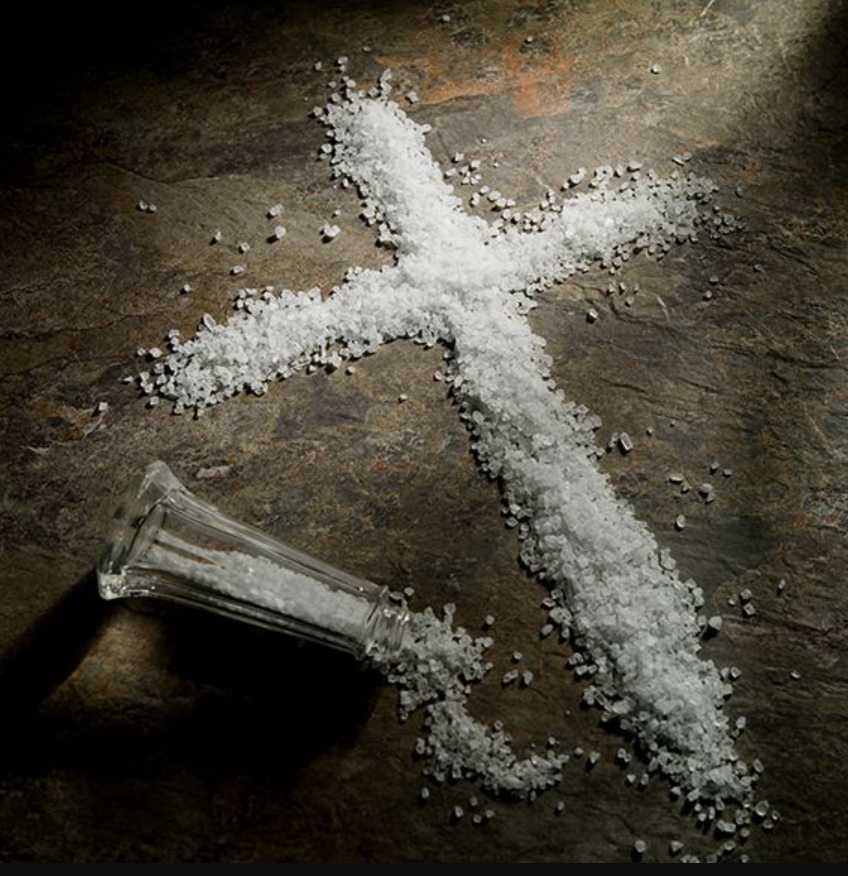
So many of our current problems have come about because of our abandonment of the values of faith, family, and freedom, but we still have hope, even during the darkest times, if we remain faithful as Christians and citizens to be salt and light in our culture. That is why I wrote these columns and compiled them together with assistance from my friend Craig Osten, in this book.
Here is just a short excerpt from one of the columns:
Americans Still Believe in the Bible, But More Choose to Go It Alone
Several years ago, Dan Edmunds, a diplomate of the American Psychotherapy Association, said, “One of the most destructive problems is the breakdown of community, and it is this breakdown that has often led to the breakdown of persons. Though we may put many around us, we are alone.”
For decades, a major source of community for many Americans was their local house of worship. While those attending may have had varying degrees of commitment to living out their faith, they would gather to enjoy fellowship with each other as they passed through the various stages of life—from childhood all the way to life’s eventual end.
Unfortunately, fewer Americans are enjoying such community these days, and we are worse off for it. While there may be a lot of people coming in and out of their lives, fewer have the deep, abiding ties developed within a religious body. As a result, they are more alone than ever.
A few weeks ago, I read about a Marist Poll that found, while 54 percent of Americans still believe in the “God of the Bible,” they increasingly shun religious services—and the numbers are even worse for younger generations.
This is the result of the trickle-down occurring as religious attendance has been declining with each passing generation. As Daniel Cox writes, “The parents of millennials and Generation Z did less to encourage regular participation in formal worship services and model religious behaviors in their children than had previous generations.”
As has been said, values are caught, not taught, and millennials and Gen Zer’s are seeing the lack of commitment from those older than them and are following their sad example—and are feeling increasingly isolated as a result.
While a slim majority still says it believes in the God of the Bible, their lack of connection with a local religious body has profound consequences not only for themselves but for our society.
Compared to those who either infrequently attend religious services or do not attend at all, regular attenders are more actively involved in their communities and have stronger social ties with others. Is it any wonder that the unraveling of civility and our social fabric started to occur when attending weekly services became an option rather than a priority?
And without a rock such as local religious bodies to attach to, people become morally, emotionally, and physically adrift—something we see played out daily. In addition, with the loss of commitment to a religious body comes the loss of a vital institution that has always been a source of connection with others.
America was built on civic groups and other associations, like attending religious services. It was these associations Alexis de Tocqueville said, “form a society,” and in their absence, society disintegrates into individualism and moral confusion.
If we are going to restore community in America, one of the first places to start is to get people back to houses of worship, instead of watching sermons on TV or not attending in any form at all. Such a community changes our orientation—from self to selfless —as we become connected with others in the common bond of faith. Such a community will bring a restoration to our current fragmented state and bring us back together again for the common good—for us and society.
****
It is my hope that these columns – and this book – can be a tool to restore the values upon which our great nation was founded – vigorous faith, strong marriages, nurturing families, and a common good that believes in the dignity of every individual.
What Really Matters: Restoring a Legacy of Faith, Freedom, and Family can be purchased at https://www.fidelispublishing.com/. Reprinted here by permission.
Be Informed
Planned Parenthood’s annual report is out. Check out this recent podcast with Dr. Michael New of the Charlotte Lozier Institute to discover why any number of abortions is still too many.
Be Equipped
Dr. Seltz and Timothy S. Goeglein discuss the common-sense—but often lost—truth that healthy families are key to a healthy, civil, and humane society.
Be Encouraged
We are no longer terrified sinners but God’s own children because of what Jesus has done for us. And so, the Day of Judgment becomes good news for us—because it is the day when the One we love most returns to bring us home in peace.” –Dr. Kari Vo, Lutheran Hour Ministries