Jesus vs. Caesar
This April, we’re not fooling when we ask for your prayers and support for the Lutheran Center for Religious Liberty’s efforts to contend for the freedom to proclaim the faith.

“Savior.” “Lord.” “Son of God.” If you asked someone in the ancient world who these titles referred to, they might tell you “Jesus.” But depending on who you were talking to, they might also tell you “Caesar.” Modern readers of the Bible often miss the fact that some of the language the New Testament uses to talk about Jesus was also commonly used to talk about the Roman Emperor, who was not just a political leader, but someone whom people worshipped and even offered sacrifices to.
To offer just a few examples, we know from various ancient inscriptions carved into stone that Roman emperors throughout the first century were often called “savior of the world.”[1] Josephus, a Jewish writer in the late first century AD, tells us about a group Jews in Egypt who were tortured and executed because they refused to call Caesar “Lord” (Jewish War 7.418–19). Likewise, Roman emperors were commonly known as “god,” “god of god,” or “son of god.” In the Greek city of Thespiae one could read the following words of dedication: “To the only ruling Caesar, the son of god, the savior, and benefactor.”[2]
This is the world that the Gospel of Jesus was initially proclaimed in. This is the world that the New Testament was written in. Thus, when the first Christians proclaimed Jesus as “Lord,” “Savior” and “Son of God,” people noticed that they were proclaiming a different “Lord,” “Savior” and “Son of God” than Caesar.
Of course, it’s true that New Testament writers often taught Christians to “honor the emperor” (1 Peter 2:17), and you won’t see New Testament writers going out of their way to pick a fight with the emperor by saying something like, “Jesus is Lord, but the emperor is not!” Nevertheless, the people who heard apostles like Paul preaching the Gospel sometimes made the connection all on their own. When Paul was preaching in the synagogue of Thessalonica, a group of Jews became so mad that they began to accuse Paul before the local authorities, saying, “These men … have turned the world upside down … and they are all acting against the decrees of Caesar, saying that there is another king, Jesus” (Acts 17:6–7). By proclaiming Jesus as the ultimate king over the whole world, Paul was in conflict with the claims of Caesar. There can only be one savior of the world, only one king over all the earth.
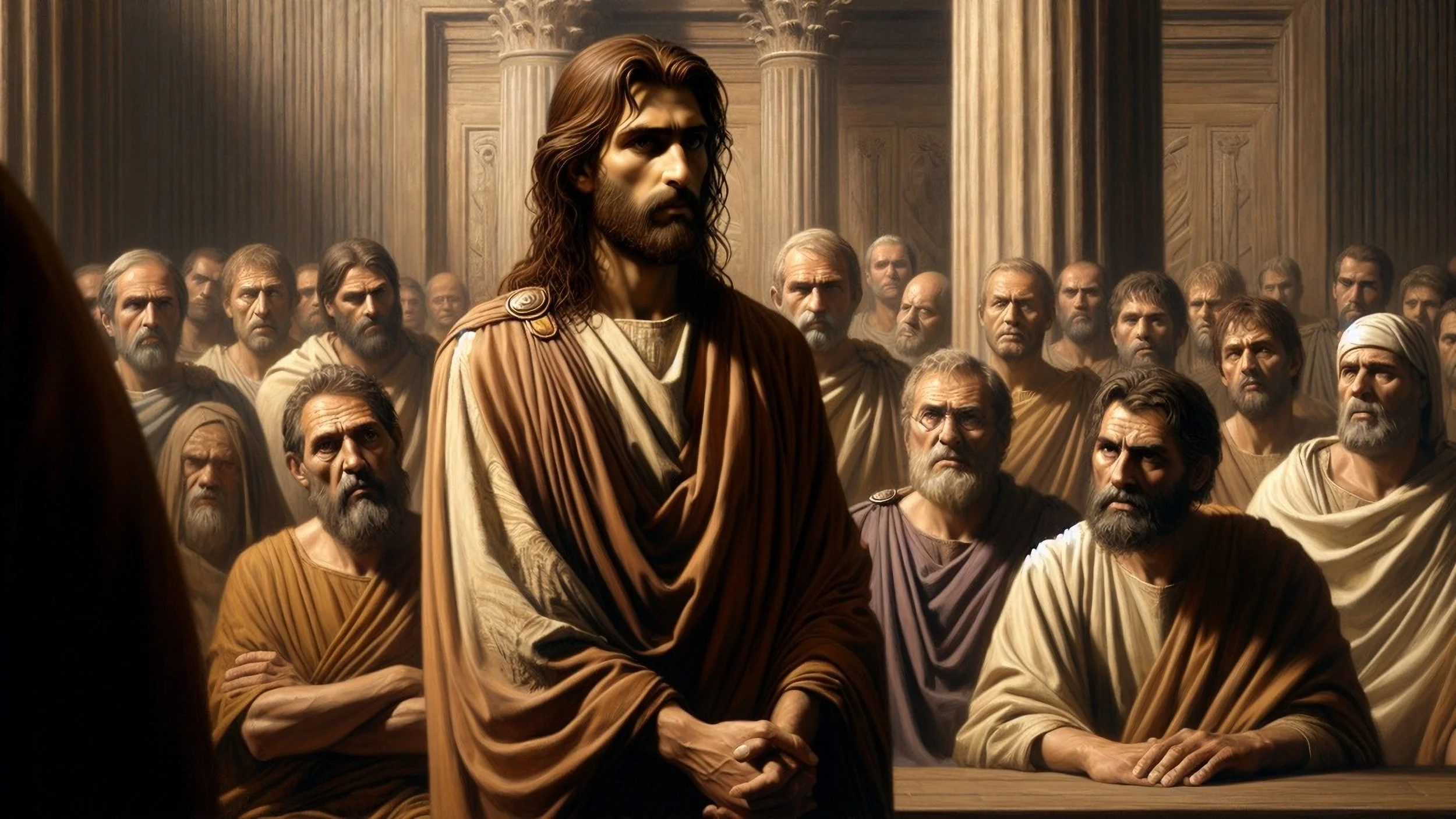
You can see this in the Gospels when the Jewish council brought Jesus before Pilate; they told Pilate that Jesus claimed to be a king (Luke 23:2). They knew that Pilate would understand why this was a problem. This issue is crystal clear in John’s account. When Pilate wanted to release Jesus, the Jewish leaders told him, “If you release this man, you are not Caesar’s friend. Everyone who makes himself a king opposes Caesar. .… We have no king but Caesar” (John 19:12, 15). They understood what the stakes were. Click here to read more from The Lutheran Witness.
Kendall A. Davis is a PhD candidate in New Testament at the University of Edinburgh and an adjunct professor at Concordia University Chicago. This article was first published in and is reprinted here with permission of The Lutheran Witness.
Be Informed
“The science is clear: the chemical abortion drug is inherently dangerous to women and prone to abuse.” Read more on why Missouri Senator Josh Hawley introduced a bill aimed at banning abortion drugs.
Be Equipped
The rise of Euthanasia in the Netherlands is every bit as bad as it sounds. Wesley Smith of the Discovery Institute explains in a recent Issues, Etc. podcast.
Be Encouraged
“In Jesus we have light, and to have light is to have life. May we rejoice in proclaiming the message of Jesus as the Apostle John did. Thanks be to God that He is light, and He shines in the darkness.” –Rev. Dennis Norby