Defund Planned Parenthood?
This June, take pride in supporting our efforts to contend for the freedom to proclaim the Christian faith.
That's the very least we can do. We have a lot of work to do. Blue states love abortion, want more of it, will never even speak against partial-birth abortion, much less children who, if born, could live outside of the womb. Red states are full of pro-life folks, many of whom would rather not push the issue. Abortion is the dark underside of our culture. What's a child in the womb worth? Nothing at all? Or is an unborn child dispensable? Is the child's worth totally dependent upon the mother? If a person is not loved, does that mean they can be dispensed with?
Abortion, in a way, reveals the heart, and the heartlessness of our present age, a case of willful blindness and ignorance. But how long have we had ultrasound? How long have we seen the child in the womb, sucking her finger? Long gone are the days when we could pretend that the child is just a biological growth, like a cyst or tumor. Long gone are the days, if they ever existed, when we could act as if it were not a child.
An unborn child soon has a beating heart, we know, and that little heart does nothing but unmask our own dark hearts. The child has a heart, but do we? Argue about immigration. Well and good. But that's a matter of policy, not of absolutes. To close a border is nothing on the order of ending a life. Is this not the worst sort of oppression, the most horrible abuse of power upon the powerless? Is a child unborn worth even, dare we say it, 3/5 of that of a born child? And if a child's worth is determined by dependency, then a newborn and toddler is likewise worthless, as is the elderly person who needs care.
And now a word for those who still claim the name of Christian. How is it that the left-leaning churches can speak endlessly of justice and not offer up even a small word of defense for the smallest among us? Especially when some, still mouthing the words of our creeds, speak of a Savior who was conceived by the Holy Spirit? Did not God's Son become one of us in the womb? The silence on such matters is deafening. The church that cannot speak against the killing of the unborn is already dead, so also the one who still claims, if in a tangential way, the name of Christian.
Of course, one does not need to be a Christian to see the matter clearly. You can look in the ultrasound, consider your own journey from conception to old age. It was you all along. Defund Planned Parenthood? It's not even close to a close call. But, yeah, we have a lot of work to do. And many, having had abortions, will probably never come around, for if they did, they would have to acknowledge what they have done. And to do that, they would have to turn to Christ, who would, even after all such wickedness, forgive and restore them.
The Rev. Dr. Peter Scaer joined the Concordia Theological Seminary, Fort Wayne, Exegetical Department in 2000. He now serves as professor and chairman of that department.
Be Informed
Ever heard people say that there aren’t any resources for moms who find themselves pregnant and alone? False! There are 14 pregnancy resource centers for every 1 Planned Parenthood. Click here to see how help for moms and babies is everywhere.
Be Equipped
Planned Parenthood has released its latest report, and the organization is just as horrific as ever. Carol Tobias of the National Right to Life explains.
Be Encouraged
“You have a higher purpose than living for yourself. Your work is His. You live for the one who died and rose for you. You share the good news about Him. That’s how God grows His family, adding branches to His tree. You get to be part of this family—a family with a rich past and a glorious future.” –Rev. Peter Sulzle
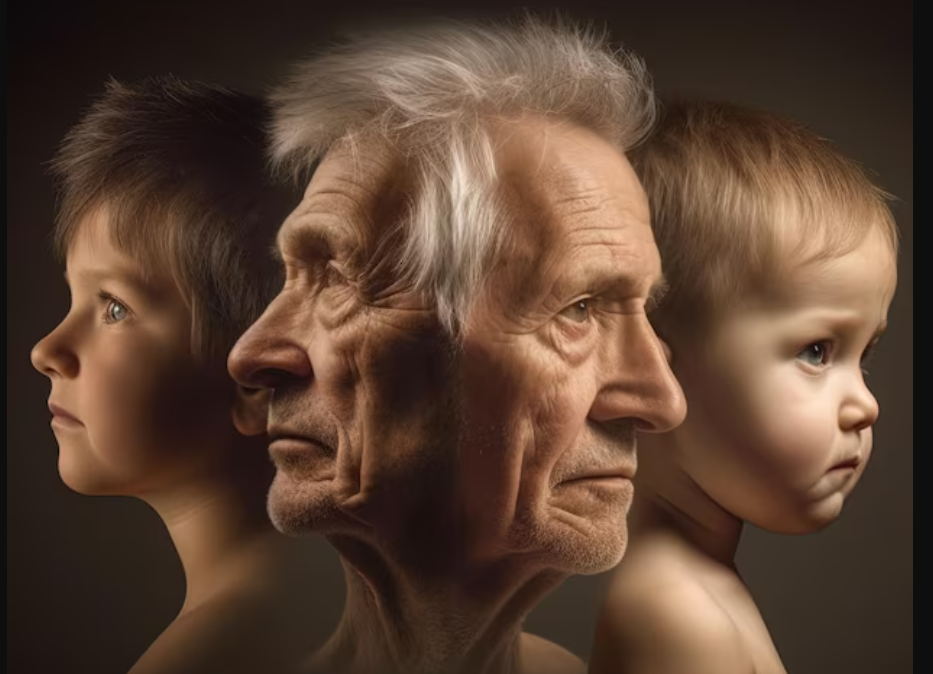
“The LGBTQ community." What other sin is talked this way? Is there a murdering community? A gossiping community? Since when does an alliance in sin spoken of in such positive terms? But this community is one that speaks lies that lead to the destruction of the family and to loneliness and isolation.
Typically, when attempting to cloud the issue, we are told that questions concerning sex and gender are "complicated." Really, it isn't. God created us male and female. The confusion arises from the deceptive ideology that pushes it. We are told that detransitioners are extremely rare. Have they not met and talked with those in the growing detransition community? We have members who have been lied to and have escaped the clutches of the deceivers, though they are not unscathed medically or emotionally. We are told that trans people do not simply decide to be trans. But they mention nothing of the work of Abigail Shrier and many others who have clearly demonstrated that the transgender phenomenon is a social contagion, especially now among women, an ideology that is spread by the secular left and through destructive influencers on social media.
Love is not a red, red rose at all. It is work — hard, hard work. It endures sacrifice and pain for the sake of someone else. It subdues one’s own desires, opinions and needs, being patient and kind, not resentful or angry or insisting on one’s own rights or way. It does not live for pleasure and satisfaction or self-actualization. Christian love is defined by Christ and follows His example as confessed in 1 Corinthians 13. Christian love lives entirely for someone else.
Luther grounded his understanding of civil government and its duties toward God in creation, teaching that rulers are a type of father. In the Large Catechism he wrote, “Thus we have two kinds of fathers presented in this commandment, fathers in blood and fathers in office, or those to whom belongs the care of the family, and those to whom belongs the care of the country. Besides these there are yet spiritual fathers.” Luther recognized the universal responsibility of all mankind to acknowledge and serve God in accordance with one’s particular station. All earthly rulers, whether of Israelite or Gentile nations, were expected to follow God’s Word. If they did not serve the Lord, like emperors Nero and Domitian, they would be held guilty by Him. Luther maintained a consistently positive estimation of Constantine and other Christian rulers throughout his writings — especially their aid in resisting the grasping tyranny of the papacy. He held up David and the other faithful kings of Israel as examples of the universal duty of rulers to acknowledge and serve God.
I’ve also sometimes struggled, I’ll confess, to reconcile my own civic duty to honor our nation’s flag with my Christian call to “fear, love and trust in God above all things.” The melody blaring from a speaker mounted high upon a tower reminds me eerily of church bells “chiming and calling” Christians to Sunday worship (LSB 645), or of a muezzin summoning Muslims to daily prayer. Although colors isn’t meant to be a spiritual act of devotion, the striking resemblance it bears to such ancient religious practices is hard to ignore.
Social media today functions much like the volatile crowds Gustave Le Bon described over a century ago when he observed, “Crowds are only capable of thinking in images, and are only to be impressed by images. It is by images alone that great leaders can be followed.” In the digital world, people aren’t working through truth with patience and reason; they’re reacting to symbols, slogans, memes, and bite-sized videos that bypass the mind and stir the gut and emotions.
"We will replace the frigidity of rugged individualism with the warmth of collectivism." Thus far Mamdani, whose words are chilling to the bone. Now we might counter that rugged individualism is a whole lot better than collectivism, and we'd be right. Collectivism means you lose your identity, you become a number, a statistic, a victim, and a ward of the state that cares not a whit about you.
Collectivism has the warmth of a Siberian gulag, a dark North Korean night. The fact that Mamdani can get away with such rhetoric, even after Communism has taken the lives of tens of millions of people, is frustrating.
What's a blessing, and what's a curse? When it comes to earthly matters, it's often not clear. Success can be a killer, especially when it comes with fame. Michael Jackson and Whitney Houston, Elvis Presley, for sure, and a whole host of late 60s heroes who died at the age of 27. The Beatles benefited from being four, so were less susceptible to lackeys.
There is no trouble too large for the government to solve, no concern too small for it to care about. Such words might be spoken of God, for whom nothing is impossible. Have you trials and temptations? Is there trouble anywhere? We should never be discouraged. What a friend we have in Mamdani?
We are hearing more and more that famous quotation from Martin Luther: “I’d rather be ruled by a wise Turk than by a foolish Christian.” The problem is, no one has been able to find that famous quotation in any of the voluminous works of Luther. It appears that the quotation is apocryphal. I suspect it may have originated as an attempt to explain the implications of Luther’s doctrine of the Two Kingdoms, as in, “Luther would have rather been ruled by a wise Turk. . .” which then was recalled as “Luther said he would rather have been. . . .” Read more from Dr. Gene Edward Veith here.
As 2025 ends, as faithful Lutherans, there is much to be thankful for as we have seen many positive developments for faith and freedom.
Pregnancy resource centers are booming while Planned Parenthood clinics are closing their doors. It looks like we are beginning to see a spiritual revival among young adults as they reject the emptiness of the culture they see around them. And several states have passed common-sense age verification laws, upheld by the U.S. Supreme Court, to protect innocent children from accessing graphic pornography online.
So, what is ahead for 2026? What policy advancements can we make to continue this positive momentum back towards faith and freedom?
Today is a dark day in the history of Illinois. Governor Pritzker—of whom every LCMS pastor in Illinois prays for each week and will continue to do so—signed into law . . . the “End-of-Life Options for Terminally Ill Patients Act,” granting terminally ill patients who have received a prognosis of six-months to live or less the ability to receive a pill in order to end their own lives.
A blessed Christmas to all of you “for today (many years ago) in the town of David a Savior has been born to you; he is Christ, the Lord. This will be a sign to you: You will find a baby wrapped in cloths and lying in a manger” (Luke 2:11-12). The life, death and resurrection of Jesus came as a blessing to the world even though the world didn’t deserve it and, even worse, was unreceptive to receiving Him as the gift that He was for them (see John 1:10-13).
We are slaves of Christ, but earthly slavery is not a good thing. Slavery is an institution of the fallen world. I am led to understand that even today there are fifty million people living as the property of others. I'm not sure what would happen if we added to that number those enslaved in various systems like North Korea. But bonds and fetters are not to be celebrated or commended, and if someone might say that it is a good thing, I have never seen anyone volunteer to be on slavery's receiving end. This is not to be a Pollyanna or to hide our heads in the sand. Throughout history, when one nation has conquered another, slavery has resulted. There will always be wars and rumors of wars, and life is messy. And yet slavery is not a good thing. And we can say so without losing sight of the fact that we as Christians are slaves of God, even as we are His children.
[Weeks ago], a group from Concordia Theological Seminary, Fort Wayne, gathered on the sidewalk that runs by the local Planned Parenthood. There were perhaps 15 of us in all, but what a mighty and faith-filled people. A young couple, a father with three or four little ones in tow, a student from Germany, another from Australia.
What of it? Things change, and prayers are answered. Just as few predicted the fall of the Soviet Union and the crumbling of the Berlin Wall, we were supposed to think that Roe v. Wade was set in stone, a law surer than the Ten Commandments. Stare decisis, we heard ad nauseam. But in step six wise and courageous judges, and we got the Dobbs decision. Now, that didn't happen by accident. It was a matter of persistent. Persistent prayer, persistent marching, persistent lobbying and electioneering. Why bother? 60 million little ones who have lost their lives. And still counting.
America has changed dramatically since the 1950s and 1960s. Back then, in the years after World War II, it was a halcyon time for religion in this country. Christianity was assumed in society; it was the default setting. Christians were denominationally focused; fights largely occurred within the faith. Now, the threat comes not only from within but also from without, from secularists and zealots determined to belittle Christianity and, if it were possible, bring about its downfall.
The times we live in call for a different mentality and a different strategy. They call for Christians of all stripes to band together to fight an enemy that seeks to curtail our influence in society and even — it’s hard to avoid this conclusion — completely silence our voice in the civic sphere.
Thanksgiving takes a lot of flak these days. Christmas haters are called “Scrooges” or “Grinches,” but haters of Thanksgiving are considered socially conscious and realistic. For many Americans, the fourth Thursday in November is an annoying holiday with racist origins — an excuse to force innocent citizens to gorge on poorly prepared, outdated foods while fraternizing with uncongenial relatives. It is, moreover, a day of hypocritical tension between trite demands to “be grateful” versus a Black Friday rush through the mall. Dismissively labeled “T-day” on social media, Thanksgiving is becoming mere no-man’s-land stuck between the two towers of Halloween and Christmas.
Thanksgiving worship services, held at the request of the government, seem strange in modern America. Some American Lutherans have wondered if this is appropriate. Our government allows the murder of babies. How can its leaders ask us to pray and give thanks? Others have questioned whether or not the annual request itself is a violation of the separation of Church and State, and still others have suggested that it might be a misunderstanding of the two kingdoms.
Is it alright for Christians to be involved with politics?
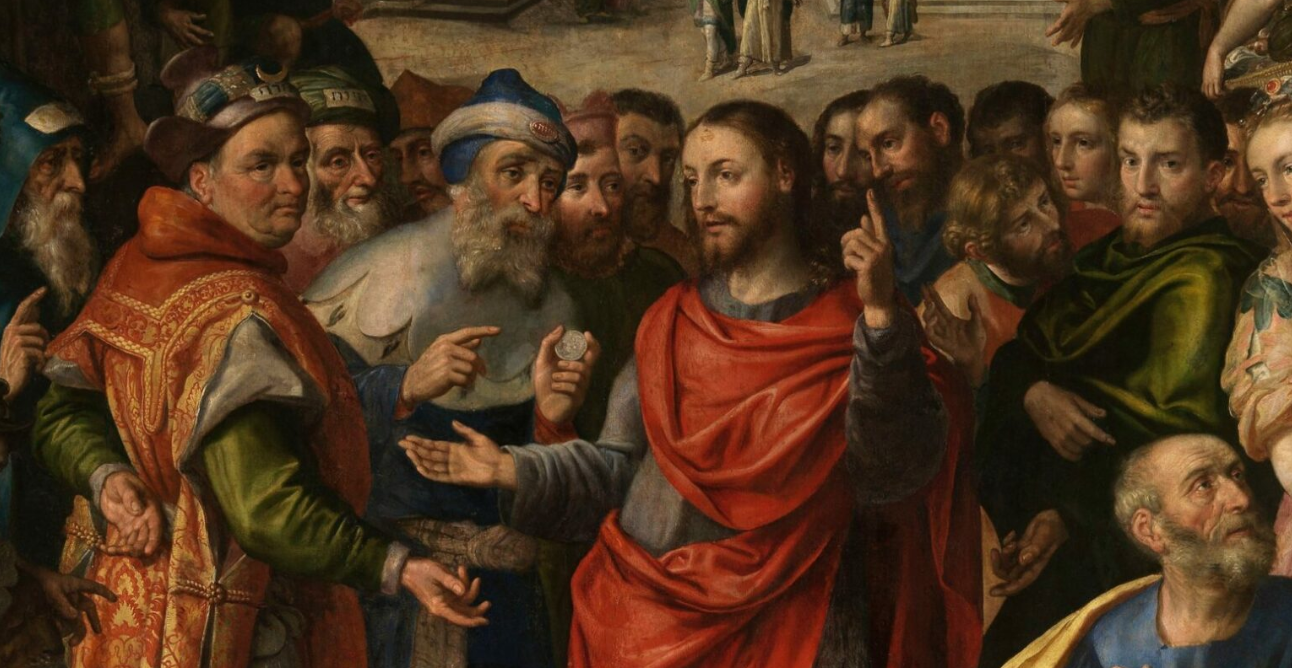
The Bible contains no specific command that either requires or forbids Christian involvement with politics. However, through the prophet Jeremiah, God teaches His people that they should, “Seek the welfare of the city where I have sent you into exile, and pray to the Lord on its behalf” (Jer. 29:57). In other places, God teaches that Christians should obey and pray for those in positions of civil authority (Matt. 22:21; Rom. 13:17; Titus 3:1; 1 Pet. 2:13). These passages, together with the general biblical teaching that Christians should care for and promote the welfare of their neighbor, would suggest that Christians should participate in the process of deciding how we, as a nation, shall live.
Having lost their religion, they start a new one. Folks who no longer read their Bible, or believe it, begin to create substitutes. I just heard of some crazed figure predicting that the Lord would come back in September. Of course, he could have, or he might come in November, or in 1000 years, but no one knows the day or hour, only the Father. And yet, then later in the day I see a 1990 video of Meryl Streep warning us about global warming, and calamities that would come in a "very short time." By the year 2000, it would be too late. Since then, global warming has turned into climate change, but the apocalyptic fever still runs high with a fervor that would make a Bible belt Pentecostal blush.
A good friend suggests that putting an end to gay marriage would be just another example of the nanny state, by which he means government overreach and intrusion into the private lives of our people. It's a cry for freedom from a libertarian point of view. In other news, I see that just 6 percent of Gen Z women think that personal success includes having children. Add to that the fact that a quarter of all children live in a home without dad. Add to that the fact that Senator Kaine, representative of many on the left, said that our rights come not from God but from government.
What to make of it? This summer I read The Communist Manifesto for the first time. Marxism is predicated on the idea that the state should have precedence over the family. Marxists see strong families as an obstacle to the state's influence. Homes are an example of private property, and family wealth promoted the practice of inheritance and intergenerational wealth. A traditional conservative says that God comes first, then family, and then the nation, which is not to be equated with the government. The Marxist seeks to put an end to all of that.
How should we fill in the blank? Traditionally Christian nations have a spotty record, but compared to what? A Hindu nation, where people are divided according to castes? A Muslim nation, where women are treated like property? A Communist nation that leads to wholesale slaughter? The Spanish Conquistador might be faulted, but consider the world of the Aztecs, the mass human sacrifice.
Then shall it be a secular nation? Is our nation somehow worse for having "In God we trust" on our money," for saying "under God" in the pledge? But is there a neutrality to strive for? Vacuums are soon filled, and we end up with cultural Marxism in which children are given puberty blockers, then hormones, leading almost inevitably to mutilating surgery. We end up with the destruction of the family. But this secularism is not neutral, to each his own. In some states, a parent can lose his child if they do not affirm their children's gender delusion, a delusion often encouraged by the secular state.
Psalm 68:5 reminds us that God acts as a father to the fatherless. In the great hymn "Praise the Almighty, My Soul, Adore Him," we sing, "He helps his children in distress, the widows and the fatherless." Do we still care about such things? As a society? In America, one in four children live in a home without dad. 40 percent of children are born to unwed mothers. That's what happens when marriage is redefined to suit adult desires. Some don't know their dads, others live in broken homes. Divorce leads mostly to kids with mom, dad gone.
We’ve heard it said lately that what we’re seeing in our culture is sin — and that’s true. But let’s not stop there. What we’re seeing is not simply a lack of virtue in a particular political party or a few mentally ill individuals making poor moral choices. What we are witnessing is a culture-wide descent into paganism—the same kind of paganism the prophets condemned in the Old Testament. And mark this: it is not new. Instead, it is ancient and dark. And it is very definable.
The prophets—men like Amos, Micah, Habakkuk, and Zephaniah — weren’t confused about the character of the nations around them. They saw it plainly.
As I’ve shared online, for the last few days I’ve been laboring to write a response to the political assassination of Charlie Kirk, trying to put words together that express a proper response to the shock and horror of the evil violence perpetrated against a Christian believer who understood the limitations of politics and the beautiful salvation message that only God could accomplish in Jesus. A person who was willing to dialogue and debate all comers in the hope of demonstrating the truth of what he said and believed. He was proud of the foundational principles of individual liberty, religious freedom, limited government, educational freedom/choice, and the importance of faith, family, freedom to live self-governed lives . . . and for that he was executed. That should truly shock us all to our core.
After finishing college at Seward, my wife Kathy and I served as lay missionaries in a remote Cree Indian village in Ontario, Canada. One day we decided we’d go for a snowmobile ride. I pulled the machine in front of our little shack. I glanced behind me to see Kathy hopping aboard, and I took off. I headed down the skidoo trail on the frozen lake on a bright clear, frigid day, chatting happily with my dear wife (or so I thought). I had made it nearly a half-mile before I realized that no one was talking back. Suddenly I did a hard double take and turned to see the empty seat right behind me. Looking back at the distant village, she was nowhere to be seen. Turns out I had taken off just as she straddled the seat, but before she’d sat down. . . . We laughed about it then, and still do to this very day.
It’s not a happy thing to read that so many of our countrymen are “nones,” belonging to no church and adhering to no way of paying homage to God. How do we raise children in a no-land, where their deepest beliefs will be met with what’s sometimes more discouraging than enmity, with the shrug of indifference and incomprehension?
I think we must bear in mind the character of this nothing. It is not deep — it cannot conceivably be deep — but it is broad, like a vast slick of muddy water and wreckage after a flood, shallow as a few inches in most places, but lapping at every post and foundation in sight.
At the 1995 synodical convention, the Synod delegates adopted resolution 6-02 titled "To Speak Out against Legalization of Assisted Suicide" (euthanasia) which reads as follows:
Whereas, The Lutheran Church—Missouri Synod affirms the sanctity of human life and recognizes the reality of human suffering; and
Whereas, Any attempt to legalize assisted suicide is an affront to the Lord, who gives life, and opens the door for abuse and future legislation that would deny the freedom of many; and
America is a gift. Rights are God given, based on the inherent dignity of man. The horrible theory of evolution undermines this truth. We are likewise told that rights are granted by earthly governments. But the created order is such that man bears the image of God, even fallen. This truth is seen already in an ultrasound. In a sense, these rights are negative. I do not have a right to take your property, but then, you have no right to take mine. A man may not be imprisoned except for compelling reasons. The family comes before the state, and therefore children belong not to the state, but to the father and mother. The right to bear arms is simply an extension of the truth that I have a right to defend my family and my home. No one is obligated to listen to me, but I have a right to free speech. No one is obligated to give me stuff, but I have the liberty to earn it.
Our Founding Fathers are indeed the fathers of all Americans. DEI taught us to despise them, to concentrate on their faults, to think of ourselves as somehow more enlightened. Critical theory is all about destruction, about seeing through something so that you can no longer see the thing itself. DEI is the philosophy of the scoff and sneer.
But as Americans, we do well to think on the God of providence and to celebrate this day with thanksgiving. Now, mind you, I honor all peoples as they sing their anthems, giving thanks for their own special heritage. But our heritage is a cornucopia, a legacy that we are called to live up to.