Religious Liberty Is Vital, but It Is not Enough!
Help support our efforts to contend for the freedom to proclaim the faith.
Click here to learn more or to donate.
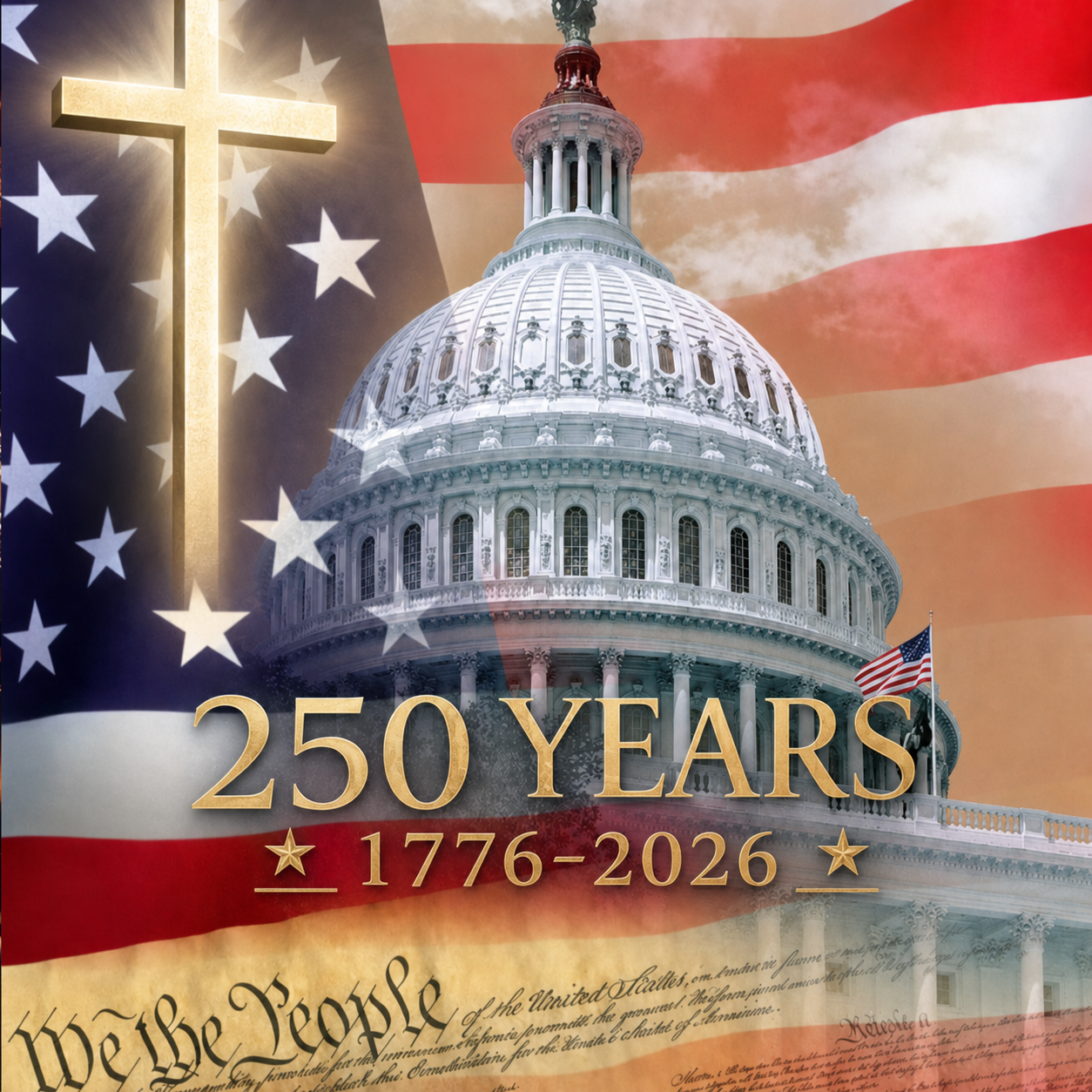
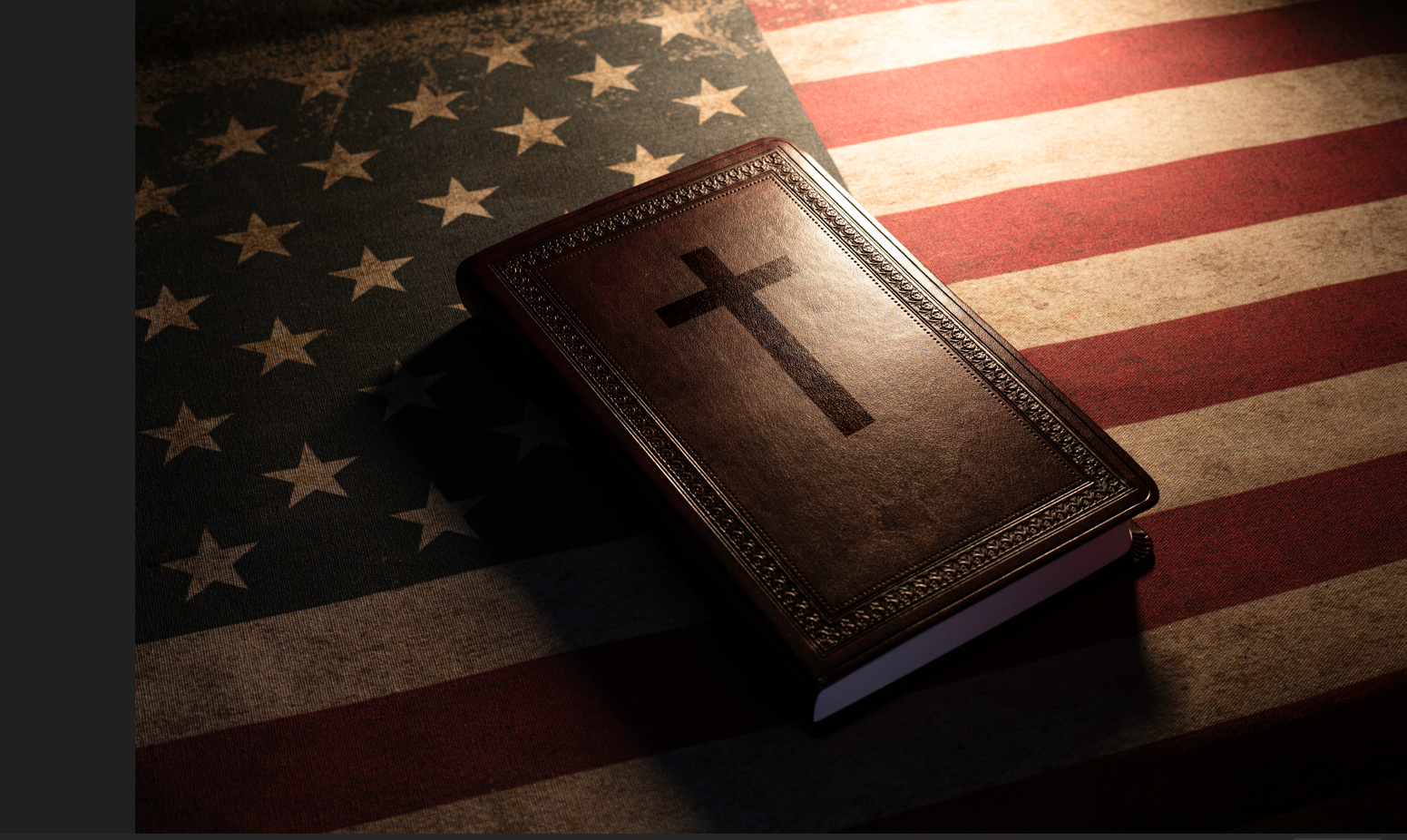
In 2021, the July 4 holiday fell on Sunday. You could hear the groans because that meant less time off, right? This year it falls on Thursday, so people surely will take the LONG weekend off. And isn’t that the point? Vacation, refreshment, leisure? Well, yes and no. The point of the holiday isn’t merely to take time off. It’s to remember the sacrifices that make temporal freedom possible (Freedom isn’t FREE), but it’s also a time to remember what makes freedom CONTINUALLY possible in practice. Yes, faith, religion, obedience to God—these undergird a healthy citizenship necessary for freedom to survive and thrive. July 4 is a commemoration, even celebration of our temporal freedoms, such as the freedoms of liberty, the First Amendment, the Second Amendment, and all of our constitutional protections. But the long weekend ends on Sunday, the day when Christians celebrate and continually receive the eternal liberty that God in Christ earned on behalf of the whole world. We have a saying here at the LCRL that we, as two-kingdom (2KG) Christians, are “to put our temporal liberties to work for the sake of the eternal liberties of Christ.” Every July 4 then, we are reminded that our temporal liberties are always in service to something bigger. We are reminded that it is a worthy thing to celebrate and even to fight for “the protections and responsibilities of religious liberty;” it is a worthy thing to fight for “equal protection under the law.” But all of those blessings are not enough. For God didn’t create and redeem this world merely so that we might live freely among its sinfulness and brokenness as we please. God didn’t engage the world through the person and work of Jesus merely to make a sinful world a little bit better place. No, He ushered in a new and eternal kingdom amidst the temporal kingdoms of the world so that all might receive His everlasting kingdom by grace through faith, and then live in service to others, both now and forever! Wow!
It’s proper, then, to say that temporal freedom is a blessing; it is to be cherished. But it is also proper to say that it is not enough for the human flourishing that God wishes the world to have. The freedoms we enjoy (temporally and eternally) compel us to live freed, virtuous, and moral lives that are motivated and empowered by God’s grace to share God’s good news and to live our lives for the sake of others. In other words, we are graciously freed to be faithful to God and then to our neighbor in His name. Temporal, religious liberty and the protections of the Constitution are precious. We celebrate them, but as John Adams, one of our Founding Fathers, reminds us:
We have no government armed with power capable of contending with human passions unbridled by morality and religion . . . Our Constitution was made only for a moral and religious people. It is wholly inadequate to the government of any other.1
On Memorial Day, we were reminded that in life, there are some things worth dying for. We honored the men and women who gave their lives so that we might have liberty and freedom in our country. But today, when July 4 starts off the long weekend that ends on Sunday, take time to remind yourselves, your families, your children that there is something even more important to our lives than mere temporal, political, or civil freedom. It is the freedom that comes from God’s redeeming work on the cross through Jesus alone. In that gracious work God in Christ literally took upon Himself the sin which destroys us and enslaves us in eternal bondage to death. He then gifts us with the reality of a life of freedom and liberty not just for now, but forever. Such a freedom, received in faith, is worth celebrating and even fighting for, not merely for ourselves, but also for the right to share it humbly and graciously with others.
So let this long July 4 weekend be one of those times when you cherish both temporal and eternal freedoms. But also realize that, while both are precious, one matters most of all. This year, think about the bigger issues that demand our voice, our efforts, and the freedom protections we have to engage the culture for the sake of the culture and the mission of the Church. This July 4 (with the extra time), think about the real Saint Nicholas (Yes, that St. Nick!). While we often reflect upon and even seek to mimic some of his generous acts at Christmas, I think July 4 is another appropriate day to be reminded of his life. As a bishop of the Early Church, he endured suffering and persecution for his faithfulness to the Gospel amidst the tyrannies of Rome. (He didn’t have First Amendment protections like we have today.)
Then, when gifted with new-found temporal freedom (still much less than we have today) via Emperor Constantine’s legal recognition of Christianity, Nicholas put that freedom to work in fighting back against the fourth century heresy of Arianism (a false teaching that diminished Jesus’ divine nature as the God/Man Savior of the world). At the Council of Nicaea, he rose to the occasion by defending and proclaiming the Gospel, faithful to the Scripture. He did it with such commitment that at one moment, overcome with zeal, St. Nick arose literally to “fight off” such heresy in order to preserve God’s saving message for all.
According to this legend, Nicholas was so angry at an advocate of Arianism that, overcome by apostolic zeal, he struck his opponent.2
He literally defended and proclaimed the truth of the freedoms of the Gospel with his body during times of persecution, with his heart in his many episodes of service, and with his soul when he boldly stood up for Jesus for all to see. He not only slapped Arianism back, his advocacy for the truth led to the formulation of the Nicene Creed that blesses the Church to this day. The stories of his kindness and his life of merciful service to the needy call us to acts of service even today.
It is a precious thing to have temporal freedoms and liberty. But let us never think such things are “enough.” For we were meant to put those freedoms to work for the sake of the ultimate freedom in Christ that comes by grace through faith in Christ alone. Happy Fourth of July, and happy long holiday weekend. Use it to think about the freedoms that Christ earned for all on the cross, the life of St. Nicholas, and the Nicene Creed this Sunday. Be blessed!
The Rev. Dr. Gregory Seltz is the executive director of the Lutheran Center for Religious Liberty.
Be Informed
Hear more about a Supreme Court ruling in a case regarding the Food and Drug Administration’s removal of safety standards on abortion drugs with Gabriella McIntyre of Alliance Defending Freedom.
Be Equipped
Why is the state of Vermont coming down so hard on foster parents? Click here to read why Vermont is disqualifying people who have proven they can provide a loving home for children simply because they hold religious beliefs that the state dislikes.
Be Encouraged
“We have grace on our side; we have Christ on our side and the love of God.” –Rev. Clifton Loman, First Lutheran Church, Tahlequah, Okla.
https://www.catholiceducation.org/en/culture/history/misquoting-our-founding-fathers.html
https://www.stnicholascenter.org/who-is-st-nicholas/real-person/early-sources
[Weeks ago], a group from Concordia Theological Seminary, Fort Wayne, gathered on the sidewalk that runs by the local Planned Parenthood. There were perhaps 15 of us in all, but what a mighty and faith-filled people. A young couple, a father with three or four little ones in tow, a student from Germany, another from Australia.
What of it? Things change, and prayers are answered. Just as few predicted the fall of the Soviet Union and the crumbling of the Berlin Wall, we were supposed to think that Roe v. Wade was set in stone, a law surer than the Ten Commandments. Stare decisis, we heard ad nauseam. But in step six wise and courageous judges, and we got the Dobbs decision. Now, that didn't happen by accident. It was a matter of persistent. Persistent prayer, persistent marching, persistent lobbying and electioneering. Why bother? 60 million little ones who have lost their lives. And still counting.
America has changed dramatically since the 1950s and 1960s. Back then, in the years after World War II, it was a halcyon time for religion in this country. Christianity was assumed in society; it was the default setting. Christians were denominationally focused; fights largely occurred within the faith. Now, the threat comes not only from within but also from without, from secularists and zealots determined to belittle Christianity and, if it were possible, bring about its downfall.
The times we live in call for a different mentality and a different strategy. They call for Christians of all stripes to band together to fight an enemy that seeks to curtail our influence in society and even — it’s hard to avoid this conclusion — completely silence our voice in the civic sphere.
Thanksgiving takes a lot of flak these days. Christmas haters are called “Scrooges” or “Grinches,” but haters of Thanksgiving are considered socially conscious and realistic. For many Americans, the fourth Thursday in November is an annoying holiday with racist origins — an excuse to force innocent citizens to gorge on poorly prepared, outdated foods while fraternizing with uncongenial relatives. It is, moreover, a day of hypocritical tension between trite demands to “be grateful” versus a Black Friday rush through the mall. Dismissively labeled “T-day” on social media, Thanksgiving is becoming mere no-man’s-land stuck between the two towers of Halloween and Christmas.
Thanksgiving worship services, held at the request of the government, seem strange in modern America. Some American Lutherans have wondered if this is appropriate. Our government allows the murder of babies. How can its leaders ask us to pray and give thanks? Others have questioned whether or not the annual request itself is a violation of the separation of Church and State, and still others have suggested that it might be a misunderstanding of the two kingdoms.
Is it alright for Christians to be involved with politics?
The Bible contains no specific command that either requires or forbids Christian involvement with politics. However, through the prophet Jeremiah, God teaches His people that they should, “Seek the welfare of the city where I have sent you into exile, and pray to the Lord on its behalf” (Jer. 29:57). In other places, God teaches that Christians should obey and pray for those in positions of civil authority (Matt. 22:21; Rom. 13:17; Titus 3:1; 1 Pet. 2:13). These passages, together with the general biblical teaching that Christians should care for and promote the welfare of their neighbor, would suggest that Christians should participate in the process of deciding how we, as a nation, shall live.
Having lost their religion, they start a new one. Folks who no longer read their Bible, or believe it, begin to create substitutes. I just heard of some crazed figure predicting that the Lord would come back in September. Of course, he could have, or he might come in November, or in 1000 years, but no one knows the day or hour, only the Father. And yet, then later in the day I see a 1990 video of Meryl Streep warning us about global warming, and calamities that would come in a "very short time." By the year 2000, it would be too late. Since then, global warming has turned into climate change, but the apocalyptic fever still runs high with a fervor that would make a Bible belt Pentecostal blush.
A good friend suggests that putting an end to gay marriage would be just another example of the nanny state, by which he means government overreach and intrusion into the private lives of our people. It's a cry for freedom from a libertarian point of view. In other news, I see that just 6 percent of Gen Z women think that personal success includes having children. Add to that the fact that a quarter of all children live in a home without dad. Add to that the fact that Senator Kaine, representative of many on the left, said that our rights come not from God but from government.
What to make of it? This summer I read The Communist Manifesto for the first time. Marxism is predicated on the idea that the state should have precedence over the family. Marxists see strong families as an obstacle to the state's influence. Homes are an example of private property, and family wealth promoted the practice of inheritance and intergenerational wealth. A traditional conservative says that God comes first, then family, and then the nation, which is not to be equated with the government. The Marxist seeks to put an end to all of that.
How should we fill in the blank? Traditionally Christian nations have a spotty record, but compared to what? A Hindu nation, where people are divided according to castes? A Muslim nation, where women are treated like property? A Communist nation that leads to wholesale slaughter? The Spanish Conquistador might be faulted, but consider the world of the Aztecs, the mass human sacrifice.
Then shall it be a secular nation? Is our nation somehow worse for having "In God we trust" on our money," for saying "under God" in the pledge? But is there a neutrality to strive for? Vacuums are soon filled, and we end up with cultural Marxism in which children are given puberty blockers, then hormones, leading almost inevitably to mutilating surgery. We end up with the destruction of the family. But this secularism is not neutral, to each his own. In some states, a parent can lose his child if they do not affirm their children's gender delusion, a delusion often encouraged by the secular state.
Psalm 68:5 reminds us that God acts as a father to the fatherless. In the great hymn "Praise the Almighty, My Soul, Adore Him," we sing, "He helps his children in distress, the widows and the fatherless." Do we still care about such things? As a society? In America, one in four children live in a home without dad. 40 percent of children are born to unwed mothers. That's what happens when marriage is redefined to suit adult desires. Some don't know their dads, others live in broken homes. Divorce leads mostly to kids with mom, dad gone.
We’ve heard it said lately that what we’re seeing in our culture is sin — and that’s true. But let’s not stop there. What we’re seeing is not simply a lack of virtue in a particular political party or a few mentally ill individuals making poor moral choices. What we are witnessing is a culture-wide descent into paganism—the same kind of paganism the prophets condemned in the Old Testament. And mark this: it is not new. Instead, it is ancient and dark. And it is very definable.
The prophets—men like Amos, Micah, Habakkuk, and Zephaniah — weren’t confused about the character of the nations around them. They saw it plainly.
As I’ve shared online, for the last few days I’ve been laboring to write a response to the political assassination of Charlie Kirk, trying to put words together that express a proper response to the shock and horror of the evil violence perpetrated against a Christian believer who understood the limitations of politics and the beautiful salvation message that only God could accomplish in Jesus. A person who was willing to dialogue and debate all comers in the hope of demonstrating the truth of what he said and believed. He was proud of the foundational principles of individual liberty, religious freedom, limited government, educational freedom/choice, and the importance of faith, family, freedom to live self-governed lives . . . and for that he was executed. That should truly shock us all to our core.
After finishing college at Seward, my wife Kathy and I served as lay missionaries in a remote Cree Indian village in Ontario, Canada. One day we decided we’d go for a snowmobile ride. I pulled the machine in front of our little shack. I glanced behind me to see Kathy hopping aboard, and I took off. I headed down the skidoo trail on the frozen lake on a bright clear, frigid day, chatting happily with my dear wife (or so I thought). I had made it nearly a half-mile before I realized that no one was talking back. Suddenly I did a hard double take and turned to see the empty seat right behind me. Looking back at the distant village, she was nowhere to be seen. Turns out I had taken off just as she straddled the seat, but before she’d sat down. . . . We laughed about it then, and still do to this very day.
It’s not a happy thing to read that so many of our countrymen are “nones,” belonging to no church and adhering to no way of paying homage to God. How do we raise children in a no-land, where their deepest beliefs will be met with what’s sometimes more discouraging than enmity, with the shrug of indifference and incomprehension?
I think we must bear in mind the character of this nothing. It is not deep — it cannot conceivably be deep — but it is broad, like a vast slick of muddy water and wreckage after a flood, shallow as a few inches in most places, but lapping at every post and foundation in sight.
At the 1995 synodical convention, the Synod delegates adopted resolution 6-02 titled "To Speak Out against Legalization of Assisted Suicide" (euthanasia) which reads as follows:
Whereas, The Lutheran Church—Missouri Synod affirms the sanctity of human life and recognizes the reality of human suffering; and
Whereas, Any attempt to legalize assisted suicide is an affront to the Lord, who gives life, and opens the door for abuse and future legislation that would deny the freedom of many; and
America is a gift. Rights are God given, based on the inherent dignity of man. The horrible theory of evolution undermines this truth. We are likewise told that rights are granted by earthly governments. But the created order is such that man bears the image of God, even fallen. This truth is seen already in an ultrasound. In a sense, these rights are negative. I do not have a right to take your property, but then, you have no right to take mine. A man may not be imprisoned except for compelling reasons. The family comes before the state, and therefore children belong not to the state, but to the father and mother. The right to bear arms is simply an extension of the truth that I have a right to defend my family and my home. No one is obligated to listen to me, but I have a right to free speech. No one is obligated to give me stuff, but I have the liberty to earn it.
Our Founding Fathers are indeed the fathers of all Americans. DEI taught us to despise them, to concentrate on their faults, to think of ourselves as somehow more enlightened. Critical theory is all about destruction, about seeing through something so that you can no longer see the thing itself. DEI is the philosophy of the scoff and sneer.
But as Americans, we do well to think on the God of providence and to celebrate this day with thanksgiving. Now, mind you, I honor all peoples as they sing their anthems, giving thanks for their own special heritage. But our heritage is a cornucopia, a legacy that we are called to live up to.
475 years ago, Magdeburg, Germany, was under siege by her own emperor, Charles V. It was the last Lutheran city remaining in Germany only four years after the death of Martin Luther. At issue was the preaching of the Gospel and the administration of the Sacraments. The highest authority in the land was demanding that the city churches re-institute Roman worship practices.
The city officers faced a difficult choice. Should they abandon the scriptural doctrine and practice restored by the Lutheran Reformation? Or should they take up arms against the God-ordained temporal authority? The pastors and theologians of the city penned the Magdeburg Confession to instruct the city councilmen of their God-given duty.
Two kinds of righteousness? I suppose, but not as it's often spoken about in our midst. There is civic righteous, which is to live in accordance with the natural law and may rightly describe the life of anyone, with or without Christ. Civil righteousness, reverence for life, for marriage, for the rights of property, and the like is a good thing. A Mormon may then live a life of civic righteousness, though he cannot be truly righteous or declared righteous.
We are told that the righteousness that comes from God is vertical and differs from all human righteousness. But such a notion needs to be challenged. The righteousness that we receive from God is, in fact, the righteousness lived on the horizontal plane. Many Christians think of righteousness as a gift from God that finds an opening in the cross of Christ. But that is misleading. The righteousness of God is, in fact, the righteousness of Christ, imputed to us because of Christ's active and passive obedience, even unto His death as a sacrifice for our sins. The likes of Forde and Paulson mislead, saying that Christ came forgiving, and for that He was murdered. By no means. Christ's forgiveness was made possible by the Father's sacrifice of His Son, as well as by Christ actually fulfilling, not putting an end to, the Law.
Recently, one among us complained that the LCMS has more often taken positions on the Republican side of things, with nothing from the Democrat agenda. I wonder if such complaints, from an opposite point of view, are made in the ELCA. What of it? Among the so-called Republican views cited were articles on being pro-life and warning against the rainbow revolution and the trans crisis. But these are not positions based on politics, though politics matter as a matter of justice and protection, but are essential to our humanity. Those who favor abortion, gay marriage, and the transgender agenda are in fact at war with the God of Genesis, the Author of creation. About such things there should be no debate among us, for to deny male/female, to deny the child in the womb is to deny Christ, who Himself lived in the womb of Mary, reiterated the truth of creation (Matthew 19, Mark 10) and came to be the groom for His bride, the Church.
English Statesman George Savile quipped, “Men are not hanged for stealing horses, but that horses would not be stolen.” With all that is happening in the world, his words concentrate our thoughts. Justice is not merely about trials and verdicts leading to punishment. It’s also about deterrence.
Through current events, many are relearning a seemingly long-forgotten factor relative to justice. As I watched the evening news with my wife, a segment came on about Venezuelan gang members being ordered back into the country after deportation. Without prompting, she asked, “What does it say when a federal judge orders the immediate return of violent criminals who’ve already been deported?”
The Bible is an earthy, fleshy book. God forms Adam from dirt. He fashions Eve from Adam’s rib. They eat forbidden fruit and use animal skin for covering. There are pillars of smoke and fire, roasted lambs and bitter herbs, bloody sacrifices and clouds of temple incense. And not only in the Old Testament — the New Testament continues with such physicality. Jesus heals with spit and dirt, fingers in ears, and caskets touched. A bloody cross culminates in bodily resurrection. Finally, He promises the resurrection of our bodies and a renewed physical earth.
Biblical salvation is not an offer to escape the body into some disembodied realm, whether platonic, gnostic, Eastern, transhumanist or anything else. Rather, the Bible deeply anchors redemption itself to the body. God carries out His redemptive deliverance through intense bodily realities from creation to consummation.
Make no mistake, legal suicide corrupts. Corrupts doctors who have taken an oath to do no harm. Corrupts a medical system that comes to think of patients as costs. Corrupts sacred bonds of a family, and the ties that bind generations. The fact that we are so willing to kill an unborn child, the fact that Obama, when in the Illinois legislature, would not even vote to ban partial-birth abortion should tell us something. The weak and the vulnerable are found at life's beginning and end and then everywhere in between. Where there is not right or wrong, there is only power; where life is not held as precious, it becomes cheap.
That's the story of salvation. We are given a glimpse in Abraham's willingness to put Isaac on the altar. In a worldly way, we see it when parents send their sons off to war. But what of those parents who say, "I just want my child to be happy"? I think we all get it, though that can't be the end all. There has to be something more. The writer to the Hebrews tells us that Abraham knew that Isaac would live again, would rise from the dead. But then, don't we?
It’s Friday, July 4th, 2025, in Washington D.C. and it has been an incredible journey. Our LCRL work started in 2017. From the start, our mission has been to bring a faithful two-kingdom voice into the heart of federal politics—a voice that limits the reach of government, defends the family and the Church, and upholds First Amendment freedoms so that God’s people can freely proclaim the whole counsel of God without fear of coercion or intervention to the contrary. For a time, threats like COVID shutdowns, the Obergefell decision, and the politicized coercion of DEI-LGBTQ mandates eroded those protections and weaponized government against those holding to traditional, biblical values.
That's how Marxism works. In the Communist Manifesto, it's the freeman and slave, the patrician and the plebeian, lord and serf, guild-master and journeyman. Translated into the present, it's critical theory where it becomes a matter accumulating points. Score one for being a woman, one for being a person of color, one for being LGB, and perhaps two for being T. Count yourself as an enemy of the one percent, and that's at least a half-point. Such an odd thing, yet you gain a bit of oppressed status by including yourself among the 99 percent. Say you are an LGBTQ ally, another half point, and so on. Colleges have long operated this way, and many young people, young women especially, come home as trained Marxists.
If a couple came to me and said, “Pastor, we’d like to get married, and we’d like to do everything we can today to make sure our marriage ends in divorce tomorrow,” then I would tell them that the first thing they should do is move in together. Cohabitation is that destructive to marriage and family life.
However, the warning must not stop there. Because it is a form of public and intentional sin, cohabitation is particularly destructive to the conscience, and not just to the couple’s conscience but also to the conscience of the Christian community. Many couples view their choices as going no further than themselves. I would like to challenge this by considering some of the ways that cohabitation harms the broader Christian community.
That's the very least we can do. We have a lot of work to do. Blue states love abortion, want more of it, will never even speak against partial-birth abortion, much less children who, if born, could live outside of the womb. Red states are full of pro-life folks, many of whom would rather not push the issue. Abortion is the dark underside of our culture. What's a child in the womb worth? Nothing at all? Or is an unborn child dispensable? Is the child's worth totally dependent upon the mother? If a person is not loved, does that mean they can be dispensed with?
The story has many troubling aspects, not least of which is the parents’ decision based on inaccurate information about the child’s chance of surviving and thriving. But what troubles me most is that I encounter fellow Lutherans who have bought the narrative that it is better for babies with physical imperfections to be aborted rather than embraced and loved for whatever time the Lord allows them to live. I offer four problems with that mindset.
Abortion is a human right. So also is the right to ensure that children have puberty blockers and hormone treatment leading to mutilating surgery. Engage in debate, present the facts, and you will be shouted down by the mob. But that is a little child in the womb, a human being at an early stage. But you will hear only "My body, my choice." And if you take the argument further, you will hear more shouting, as the protestors screams and then repeats over and over again. What is a woman? There is no answer, but that doesn't bother the mob. Is there really such thing as a trans-child? How would you know? Might the child simply be confused? No answer, only the mantra, "Trans right are human rights."
There was a great wedding in Leipzig, Germany, in the mid-1730s. We don’t know whose wedding it was, and we wouldn’t think anything of it today at all, had not Johann Sebastian Bach composed a cantata for it. A cantata was a piece of concerted music, about 20 minutes long and split into various movements, made up of sung Scripture passages and poetic verses. Almost all of Bach’s cantatas end with a hymn stanza.
Think for a moment about which hymn stanza would best conclude a cantata at a wedding. What words should be echoing in the ears of bridegroom and bride as they prepare for married life together? Which would be best?