The supreme court’s back in session and why it matters
In our Liberty Lectures around the country (For more information or to schedule a Champions for Liberty Weekend at your church or school, call us at 202-868-7291), we’ve talked about the one great threat to our religious liberty in modern America. It has to do with the Supreme Court “getting out of its judicial lane” by legislating rather than merely ruling as to whether a law is or is not constitutional. Alexander said in Federalist 78:
It equally proves that though individual oppression may now and then proceed from the courts of justice, the general liberty can never be endangered from that quarter: I mean so long as the judiciary remains truly distinct from both the legislature and executive; for I agree that “there is no liberty if the power of judging be not separated from the legislative and the executive powers.” And it proves, in the last place, that as liberty can have nothing to fear from the judiciary alone, but it would have everything to fear from its union with either of the other departments.[1]
Many of the oppressive rulings of the court, past and present, from Dred Scott, to Roe v. Wade, to Obergefell v. Hodges, were misalignments of the judicial branch with that of the legislative branch. In fact, such cases either wrongly limited rights or created legislation virtually overnight by judicial fiat. Whether one agrees with theses rulings or not, it should be commonly agreed that the court in these cases had undertaken legislative powers that were not theirs to take. And because of that, the individual liberties of all Americans were denied or further put at risk.
In this judicial session, which began on Oct. 9, 2019, such rights are again at risk. The court is hearing cases that have to do with sex, sexual orientation, and religious liberty. Most at risk is the First Amendment freedoms of speech and religious liberty. The court is ruling on whether or not to redefine and even expand the meaning of “sex” in Title VII of the Civil Rights Act of 1964, which bans employer discrimination based on race, color, religion, sex, or national origin to include “sexual orientation” in the term “sex.”
In 1964, the legislators who wrote the legislation meant “male and female” in the term “sex.” This writer believes that the court should maintain its separation from the legislative and executive branch by reaffirming the original meaning of the text in Title VII as it relates to the cases of Bostock v. Clayton County, Georgia and Harris Funeral Home, Inc. v. EEOC. The 1964 act does not speak to the issues of one’s perceived sexual identity and transgenderism. To create a symbiosis between “sex” and “sexual orientation” that defies scientific differentiation between the terms, to refuse to acknowledge differences of opinion on what constitutes healthy sexual behavior and practice is bad in and of itself. But to expand the word “sex” to also mean “sexual orientation” would be worse because it would take such rulings out of the hands of the people and their elected officials and put it in the hands of nine unelected judges.
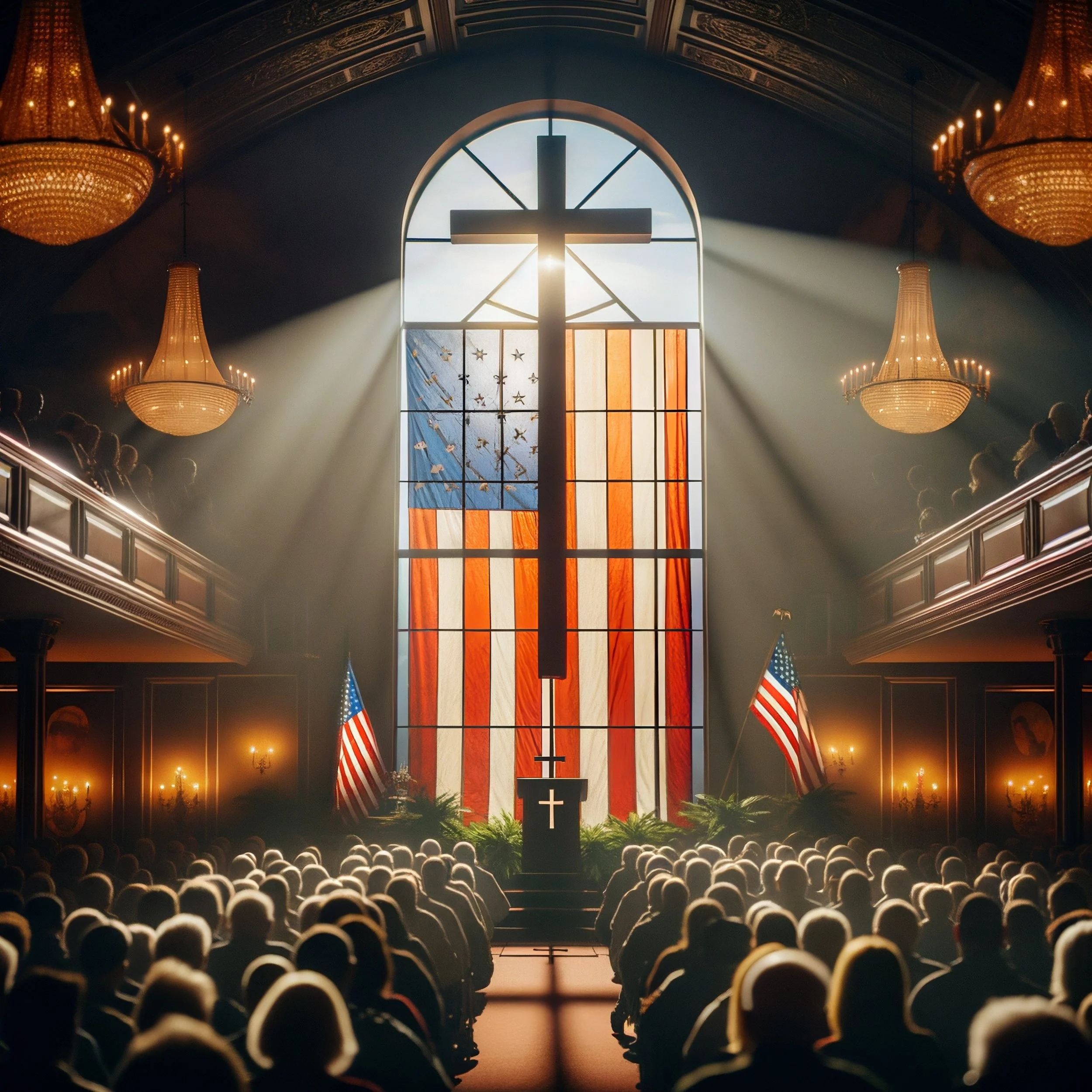
So, the Supreme Court is back in session and its rulings are vital to maintaining not only the separation of powers between the executive, the judicial, and the legislative branches of our government. These rulings are vital to our First Amendment religious liberties. The courts should do their duty. They should maintain their judicial separation from the legislative branches by ruling according to what Title VII meant in 1964, not by ruling what we think or don’t think it should mean today. After all, there are legislative ways to deal with such things. How the court rules in these cases is vital to the individual liberties of every American citizen and vital to the religious liberty of our churches and religious institutions. Keep each judge in your prayers. Everyone’s religious liberties depend on it, even those with whom we disagree.
The Rev. Dr. Gregory Seltz is the executive director of the Lutheran Center for Religious Liberty.
Be Informed
Dr. Jennifer Roback Morse talks about the “contagiousness of divorce” and the importance of defending marriage as God designed it. Listen here.
Be Equipped
Need help knowing how to pray for our nation, her leaders, your neighbors, or people you disagree with? Click here for a prayer that puts the focus back on Christ and the mercy He shows to all His creation.
Be Encouraged
“We must extinguish our resentment if we expect harmony and union. There has been too much of a desire on the part of some of our very good friends . . . to interfere with and dictate to those states, to treat the people not as fellow citizens; there is too little respect for their rights. I do not sympathize in these feelings.”

“The LGBTQ community." What other sin is talked this way? Is there a murdering community? A gossiping community? Since when does an alliance in sin spoken of in such positive terms? But this community is one that speaks lies that lead to the destruction of the family and to loneliness and isolation.
Typically, when attempting to cloud the issue, we are told that questions concerning sex and gender are "complicated." Really, it isn't. God created us male and female. The confusion arises from the deceptive ideology that pushes it. We are told that detransitioners are extremely rare. Have they not met and talked with those in the growing detransition community? We have members who have been lied to and have escaped the clutches of the deceivers, though they are not unscathed medically or emotionally. We are told that trans people do not simply decide to be trans. But they mention nothing of the work of Abigail Shrier and many others who have clearly demonstrated that the transgender phenomenon is a social contagion, especially now among women, an ideology that is spread by the secular left and through destructive influencers on social media.
The Bulletin Insert is designed to be printed and cut in half to fit conveniently inside a Sunday worship bulletin. Each month an insert will offer insight, encouragement, and information from the LCRL on the topics of Religious Liberty, Life, Marriage, or Education.
The dates identifying the LCRL bulletin blurbs are only suggestions. Please feel free to use any and all of the bulletin blurbs as your ministry needs allow.
Today’s verses are Ephesians 5:8-9, where the Bible says,
For you were once darkness, but now you are light in the Lord. Live as children of light 9 (for the fruit of the light consists in all goodness, righteousness and truth).
Love is not a red, red rose at all. It is work — hard, hard work. It endures sacrifice and pain for the sake of someone else. It subdues one’s own desires, opinions and needs, being patient and kind, not resentful or angry or insisting on one’s own rights or way. It does not live for pleasure and satisfaction or self-actualization. Christian love is defined by Christ and follows His example as confessed in 1 Corinthians 13. Christian love lives entirely for someone else.
Today’s verses are John 4:10-14, where the Bible recounts Jesus’ conversation with a Samaritan woman at a well.
Jesus answered her, “If you knew the gift of God and who it is that asks you for a drink, you would have asked him and he would have given you living water.” 11 “Sir,” the woman said, “you have nothing to draw with and the well is deep. Where can you get this living water? 12 Are you greater than our father Jacob, who gave us the well and drank from it himself, as did also his sons and his livestock?” 13 Jesus answered, “Everyone who drinks this water will be thirsty again, 14 but whoever drinks the water I give them will never thirst. Indeed, the water I give them will become in them a spring of water welling up to eternal life.”
Luther grounded his understanding of civil government and its duties toward God in creation, teaching that rulers are a type of father. In the Large Catechism he wrote, “Thus we have two kinds of fathers presented in this commandment, fathers in blood and fathers in office, or those to whom belongs the care of the family, and those to whom belongs the care of the country. Besides these there are yet spiritual fathers.” Luther recognized the universal responsibility of all mankind to acknowledge and serve God in accordance with one’s particular station. All earthly rulers, whether of Israelite or Gentile nations, were expected to follow God’s Word. If they did not serve the Lord, like emperors Nero and Domitian, they would be held guilty by Him. Luther maintained a consistently positive estimation of Constantine and other Christian rulers throughout his writings — especially their aid in resisting the grasping tyranny of the papacy. He held up David and the other faithful kings of Israel as examples of the universal duty of rulers to acknowledge and serve God.
Prayer Partner Thursday provides a month-long prayer emphasis in one of the four Lutheran Center for Religious Liberty areas of emphasis: Religious Liberty, Sanctity of Life, Educational Freedom, and Marriage as an Institution (family).
Today’s verses are John 3:16-18, where Jesus says,
For God so loved the world that he gave his one and only Son, that whoever believes in him shall not perish but have eternal life. 17 For God did not send his Son into the world to condemn the world, but to save the world through him. 18 Whoever believes in him is not condemned, but whoever does not believe stands condemned already because they have not believed in the name of God’s one and only Son.
Luther grounded his understanding of civil government and its duties toward God in creation, teaching that rulers are a type of father. In the Large Catechism he wrote, “Thus we have two kinds of fathers presented in this commandment, fathers in blood and fathers in office, or those to whom belongs the care of the family, and those to whom belongs the care of the country. Besides these there are yet spiritual fathers.” Luther recognized the universal responsibility of all mankind to acknowledge and serve God in accordance with one’s particular station. All earthly rulers, whether of Israelite or Gentile nations, were expected to follow God’s Word. If they did not serve the Lord, like emperors Nero and Domitian, they would be held guilty by Him. Luther maintained a consistently positive estimation of Constantine and other Christian rulers throughout his writings — especially their aid in resisting the grasping tyranny of the papacy. He held up David and the other faithful kings of Israel as examples of the universal duty of rulers to acknowledge and serve God.
Today’s passage is Matthew 4:8-11 where the Bible tells us one of the ways in which the devil tempted Jesus.
Again, the devil took him to a very high mountain and showed him all the kingdoms of the world and their splendor. 9 “All this I will give you,” he said, “if you will bow down and worship me.”
10 Jesus said to him, “Away from me, Satan! For it is written: ‘Worship the Lord your God, and serve him only.11 Then the devil left him, and angels came and attended him.
The pancakes, pączki, and pierogis still linger on my tastebuds as I walk the aisle toward the altar for the imposition of ashes. The richness of those foods recalls times of plenty—times of excess—times when I chased the wants of life instead of resting in the sufficiency of the needs God provides.
I’ve also sometimes struggled, I’ll confess, to reconcile my own civic duty to honor our nation’s flag with my Christian call to “fear, love and trust in God above all things.” The melody blaring from a speaker mounted high upon a tower reminds me eerily of church bells “chiming and calling” Christians to Sunday worship (LSB 645), or of a muezzin summoning Muslims to daily prayer. Although colors isn’t meant to be a spiritual act of devotion, the striking resemblance it bears to such ancient religious practices is hard to ignore.
The Bulletin Insert is designed to be printed and cut in half to fit conveniently inside a Sunday worship bulletin. Each month an insert will offer insight, encouragement, and information from the LCRL on the topics of Religious Liberty, Life, Marriage, or Education.
The dates identifying the LCRL bulletin blurbs are only suggestions. Please feel free to use any and all of the bulletin blurbs as your ministry needs allow.
Today’s passage is Matthew 17:1-8, where the Bible tells us of this momentous event:
And after six days Jesus took with him Peter and James, and John his brother, and led them up a high mountain by themselves. 2 And he was transfigured before them, and his face shone like the sun, and his clothes became white as light. 3 And behold, there appeared to them Moses and Elijah, talking with him. 4 And Peter said to Jesus, “Lord, it is good that we are here. If you wish, I will make three tents here, one for you and one for Moses and one for Elijah.” 5 He was still speaking when, behold, a bright cloud overshadowed them, and a voice from the cloud said, “This is my beloved Son, with whom I am well pleased; listen to him.” 6 When the disciples heard this, they fell on their faces and were terrified. 7 But Jesus came and touched them, saying, “Rise, and have no fear.” 8 And when they lifted up their eyes, they saw no one but Jesus only.
Social media today functions much like the volatile crowds Gustave Le Bon described over a century ago when he observed, “Crowds are only capable of thinking in images, and are only to be impressed by images. It is by images alone that great leaders can be followed.” In the digital world, people aren’t working through truth with patience and reason; they’re reacting to symbols, slogans, memes, and bite-sized videos that bypass the mind and stir the gut and emotions.
Today’s verses are Deuteronomy 30:15-18a, where Moses says,
See, I have set before you today life and good, death and evil. If you obey the commandments of the Lord your God that I command you today, by loving the Lord your God, by walking in his ways, and by keeping his commandments and his statutes and his rules, then you shall live and multiply, and the Lord your God will bless you in the land that you are entering to take possession of it. But if your heart turns away, and you will not hear, but are drawn away to worship other gods and serve them, I declare to you today, that you shall surely perish.
"We will replace the frigidity of rugged individualism with the warmth of collectivism." Thus far Mamdani, whose words are chilling to the bone. Now we might counter that rugged individualism is a whole lot better than collectivism, and we'd be right. Collectivism means you lose your identity, you become a number, a statistic, a victim, and a ward of the state that cares not a whit about you.
Collectivism has the warmth of a Siberian gulag, a dark North Korean night. The fact that Mamdani can get away with such rhetoric, even after Communism has taken the lives of tens of millions of people, is frustrating.
Prayer Partner Thursday provides a month-long prayer emphasis in one of the four Lutheran Center for Religious Liberty areas of emphasis: Religious Liberty, Sanctity of Life, Educational Freedom, and Marriage as an Institution (family).
Today’s passage is from 1 Corinthians 1:26-31, where the Bible says….
But God chose the foolish things of the world to shame the wise; God chose the weak things of the world to shame the strong; God chose the lowly things of this world and the despised things of the world to nullify the things that are, so that no one can boast before him. It is because of him that you are in Jesus Christ, who has become for us wisdom from God that is our righteousness, holiness, and redemption, therefore as it is written; "let him who boasts, boast in the Lord!"
We live in an age obsessed with image management. Entire industries exist to shape perception—public relations firms, branding consultants, and social media strategists whose job is to make people appear impressive.
What's a blessing, and what's a curse? When it comes to earthly matters, it's often not clear. Success can be a killer, especially when it comes with fame. Michael Jackson and Whitney Houston, Elvis Presley, for sure, and a whole host of late 60s heroes who died at the age of 27. The Beatles benefited from being four, so were less susceptible to lackeys.
Today’s verse is Matthew 4:17, where the Bible says,
From that time on Jesus began to preach, “Repent, for the kingdom of heaven has come near.”
There is no trouble too large for the government to solve, no concern too small for it to care about. Such words might be spoken of God, for whom nothing is impossible. Have you trials and temptations? Is there trouble anywhere? We should never be discouraged. What a friend we have in Mamdani?
The Bulletin Insert is designed to be printed and cut in half to fit conveniently inside a Sunday worship bulletin. Each month an insert will offer insight, encouragement, and information from the LCRL on the topics of Religious Liberty, Life, Marriage, or Education.
The dates identifying the LCRL bulletin blurbs are only suggestions. Please feel free to use any and all of the bulletin blurbs as your ministry needs allow.
Today’s verse is John 1:29 which tells us of this encounter between John the Baptist and Jesus:
“The next day John saw Jesus coming toward him and said, ‘Look, the Lamb of God, who takes away the sin of the world!’”
We are hearing more and more that famous quotation from Martin Luther: “I’d rather be ruled by a wise Turk than by a foolish Christian.” The problem is, no one has been able to find that famous quotation in any of the voluminous works of Luther. It appears that the quotation is apocryphal. I suspect it may have originated as an attempt to explain the implications of Luther’s doctrine of the Two Kingdoms, as in, “Luther would have rather been ruled by a wise Turk. . .” which then was recalled as “Luther said he would rather have been. . . .” Read more from Dr. Gene Edward Veith here.
Today’s passage is Matthew 3:13-17, where the Bible says,
Then Jesus came from Galilee to the Jordan to be baptized by John. 14 But John tried to deter him, saying, “I need to be baptized by you, and do you come to me?” 15 Jesus replied, “Let it be so now; it is proper for us to do this to fulfill all righteousness.” Then John consented. 16 As soon as Jesus was baptized, he went up out of the water. At that moment heaven was opened, and he saw the Spirit of God descending like a dove and alighting on him. 17 And a voice from heaven said, “This is my Son, whom I love; with him I am well pleased.”
As 2025 ends, as faithful Lutherans, there is much to be thankful for as we have seen many positive developments for faith and freedom.
Pregnancy resource centers are booming while Planned Parenthood clinics are closing their doors. It looks like we are beginning to see a spiritual revival among young adults as they reject the emptiness of the culture they see around them. And several states have passed common-sense age verification laws, upheld by the U.S. Supreme Court, to protect innocent children from accessing graphic pornography online.
So, what is ahead for 2026? What policy advancements can we make to continue this positive momentum back towards faith and freedom?