
Playing card tricks
Abe Schwab is the director of Ethics Across the Curriculum at Indiana Purdue Fort Wayne, and his work is once more featured in the Journal Gazette. This time the topic is abortion.
He begins what he thinks a wise and wry observation that there is a difference between saying, "I would never feel right doing that," and "No one should ever be allowed to do that." Well, we know where he's going. But note how he colors the question. First, the pro-life person's position is supposedly predicated upon feeling, as if there were nothing intrinsically right or wrong. Second, he makes it about power. And as an illustration, he talks about parent who may not want his son to work on Saturday or Sunday. Uh-huh.
Then he notes how the pro-life position is impure. If we were truly pro-life, we would advocate for every social program, every government plan, every type of welfare. Ludicrous. That is like saying that if I wish to bring an end to poverty, I must support socialism. Then he moves on to familiar tropes, such as the need for safe sex programs, family planning and the like.
But for all his words, Schwab manages to avoid talking about one thing, that is, the child. He says that no one wants more abortions. This in the face of a movement that now urges women to shout out their abortions. But, as an ethicist, he might actually ask the question, what does abortion accomplish? He compares it to the death penalty, apparently without irony. How can we be pro-life and pro-death penalty? Well, the same reason I believe in incarcerating only people who actually commit crimes.
But Schwab is not an honest ethicist. He's playing card tricks. Talk about this, and talk about that, but never get to the heart of the question, the beating heart of that little child inside the womb. Now, the analogy falls apart. If it is indeed a child, which is so obviously is, if science means anything, then it is not simply a matter of feeling, nor is it a desire to control the choices of another. It is simply the defense of someone who cannot defend himself. This child is not like the murderer on death row. He has done nothing to deserve any punishment whatsoever.
So, Schwab claims to wish there were fewer abortions. But he never says why. Why should there be fewer abortions? Is it a feeling he has? A preference? Based on what? Perhaps Schwab could actually look into the ultrasound and see the face of the victim, and then tell us why there should be fewer abortions. Of course, he won't. That would require an ethics of honesty.
The Rev. Dr. Peter Scaer is chairman and professor of Exegetical Theology and director of the M.A. program at Concordia Theological Seminary, Fort Wayne, Ind.
Be Informed
Learn about the future of marriage and, consequently, birth rates in a recent Issues, Etc. podcast with Tim Goeglein of Focus on the Family.
Be Equipped
“If there was ever a time for the saving Word of Christ for marriage, life and family, it is now.” The Rev. Alfonso Espinosa explains.
Be Encouraged
“So follow Daniel … Martin Luther … the believers of ages past who have stood firm on Scripture alone, by faith alone, and by God’s grace alone no matter what the cost. Spread the Word. Preach the truth. Defend your faith. Pass it on to your children. God will bless you and keep you firm in the one true faith. With that comfort, you can proclaim, ‘Here I stand. I cannot do otherwise. God help me. Amen!”
Help support our efforts to contend for the freedom to proclaim the faith. Click here to learn more or to donate.

Prayer Partner Thursday provides a month-long prayer emphasis in one of the four Lutheran Center for Religious Liberty areas of emphasis: Religious Liberty, Sanctity of Life, Educational Freedom, and Marriage as an Institution (family).
Today’s Bible reading is Philippians 4:4-6 where the Apostle Paul says,
4 Rejoice in the Lord always. I will say it again: Rejoice! 5 Let your gentleness be evident to all. The Lord is near. 6 Do not be anxious about anything, but in every situation, by prayer and petition, with thanksgiving, present your requests to God.
Thanksgiving takes a lot of flak these days. Christmas haters are called “Scrooges” or “Grinches,” but haters of Thanksgiving are considered socially conscious and realistic. For many Americans, the fourth Thursday in November is an annoying holiday with racist origins — an excuse to force innocent citizens to gorge on poorly prepared, outdated foods while fraternizing with uncongenial relatives. It is, moreover, a day of hypocritical tension between trite demands to “be grateful” versus a Black Friday rush through the mall. Dismissively labeled “T-day” on social media, Thanksgiving is becoming mere no-man’s-land stuck between the two towers of Halloween and Christmas.
Today’s reading is Colossians 1:17-20 where the Bible says this of Jesus Christ:
17 And he is before all things, and in him all things hold together. 18 And he is the head of the body, the church. He is the beginning, the firstborn from the dead, that in everything he might be preeminent. 19 For in him all the fullness of God was pleased to dwell, 20 and through him to reconcile to himself all things, whether on earth or in heaven, making peace by the blood of his cross
Thanksgiving worship services, held at the request of the government, seem strange in modern America. Some American Lutherans have wondered if this is appropriate. Our government allows the murder of babies. How can its leaders ask us to pray and give thanks? Others have questioned whether or not the annual request itself is a violation of the separation of Church and State, and still others have suggested that it might be a misunderstanding of the two kingdoms.
The dates identifying the LCRL bulletin blurbs are only suggestions. Please feel free to use any and all of the bulletin blurbs as your ministry needs allow.
The Bulletin Insert is designed to be printed and cut in half to fit conveniently inside a Sunday worship bulletin. Each month an insert will offer insight, encouragement, and information from the LCRL on the topics of Religious Liberty, Life, Marriage, or Education.
Today’s reading is from the Old Testament Prophet Malachi and these portions of the first three verses of chapter 4.
1 “For behold, the day is coming, burning like an oven, when all the arrogant and all evildoers will be stubble... 2 But for you who fear my name, the sun of righteousness shall rise with healing in its wings…. 3 And you shall tread down the wicked, for they will be ashes under the soles of your feet, on the day when I act,” says the Lord of hosts.
Is it alright for Christians to be involved with politics?
The Bible contains no specific command that either requires or forbids Christian involvement with politics. However, through the prophet Jeremiah, God teaches His people that they should, “Seek the welfare of the city where I have sent you into exile, and pray to the Lord on its behalf” (Jer. 29:57). In other places, God teaches that Christians should obey and pray for those in positions of civil authority (Matt. 22:21; Rom. 13:17; Titus 3:1; 1 Pet. 2:13). These passages, together with the general biblical teaching that Christians should care for and promote the welfare of their neighbor, would suggest that Christians should participate in the process of deciding how we, as a nation, shall live.
Today’s reading is 2nd Thessalonians 2:14-15 where the Bible says,
14 To this he called you through our gospel, so that you may obtain the glory of our Lord Jesus Christ. 15 So then, brothers, stand firm and hold to the traditions that you were taught by us, either by our spoken word or by our letter.
Having lost their religion, they start a new one. Folks who no longer read their Bible, or believe it, begin to create substitutes. I just heard of some crazed figure predicting that the Lord would come back in September. Of course, he could have, or he might come in November, or in 1000 years, but no one knows the day or hour, only the Father. And yet, then later in the day I see a 1990 video of Meryl Streep warning us about global warming, and calamities that would come in a "very short time." By the year 2000, it would be too late. Since then, global warming has turned into climate change, but the apocalyptic fever still runs high with a fervor that would make a Bible belt Pentecostal blush.
Today’s Bible reading is Revelation 7:9–12 where the Apostle John recounts this vision of heaven:
9 After this I looked, and behold, a great multitude that no one could number, from every nation, from all tribes and peoples and languages, standing before the throne and before the Lamb, clothed in white robes, with palm branches in their hands, 10 and crying out with a loud voice, “Salvation belongs to our God who sits on the throne, and to the Lamb!” 11 And all the angels were standing around the throne and around the elders and the four living creatures, and they fell on their faces before the throne and worshiped God, 12 saying, “Amen! Blessing and glory and wisdom and thanksgiving and honor and power and might be to our God forever and ever! Amen.”
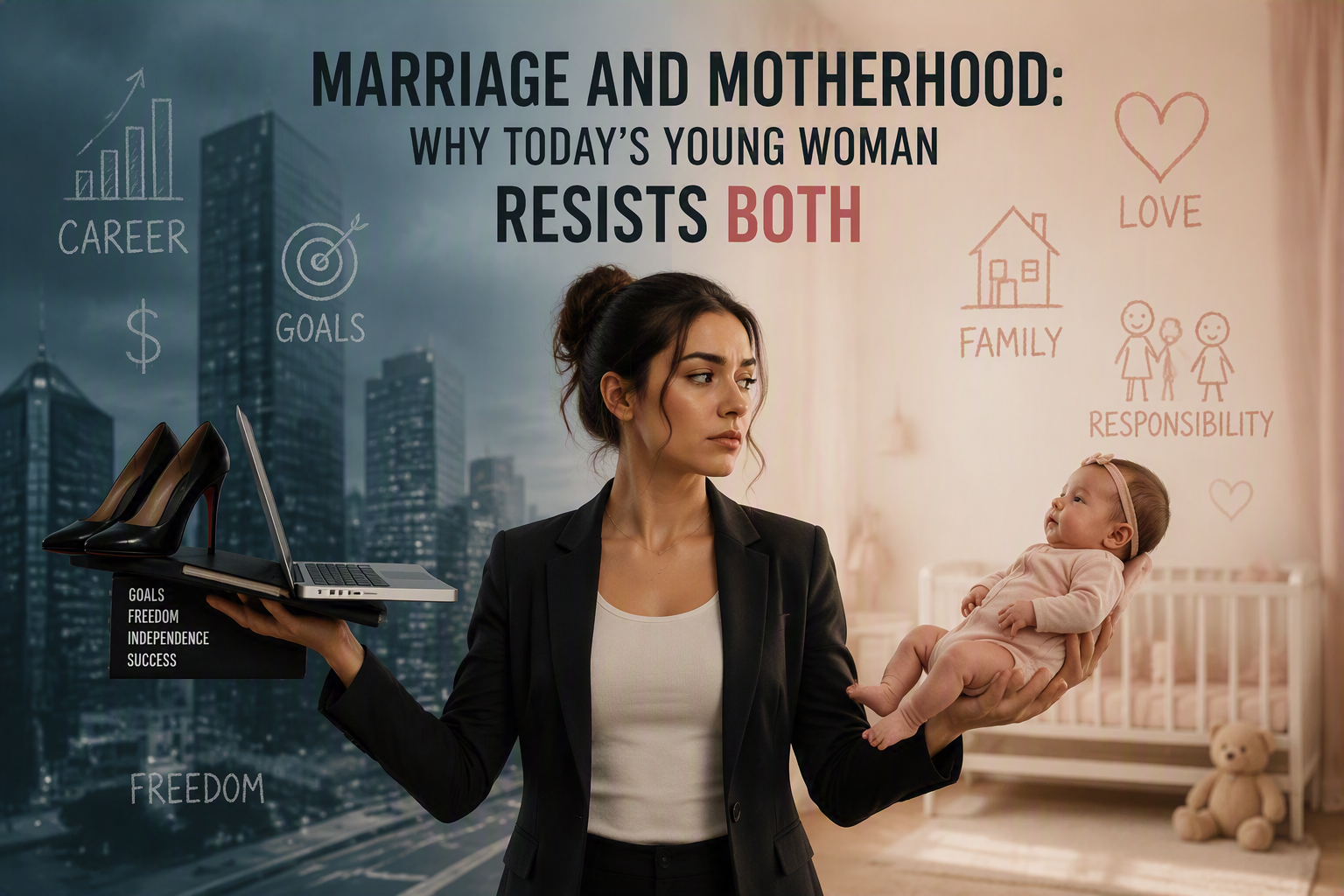
A good friend suggests that putting an end to gay marriage would be just another example of the nanny state, by which he means government overreach and intrusion into the private lives of our people. It's a cry for freedom from a libertarian point of view. In other news, I see that just 6 percent of Gen Z women think that personal success includes having children. Add to that the fact that a quarter of all children live in a home without dad. Add to that the fact that Senator Kaine, representative of many on the left, said that our rights come not from God but from government.
What to make of it? This summer I read The Communist Manifesto for the first time. Marxism is predicated on the idea that the state should have precedence over the family. Marxists see strong families as an obstacle to the state's influence. Homes are an example of private property, and family wealth promoted the practice of inheritance and intergenerational wealth. A traditional conservative says that God comes first, then family, and then the nation, which is not to be equated with the government. The Marxist seeks to put an end to all of that.
Prayer Partner Thursday provides a month-long prayer emphasis in one of the four Lutheran Center for Religious Liberty areas of emphasis: Religious Liberty, Sanctity of Life, Educational Freedom, and Marriage as an Institution (family).
Today’s reading is 2 Timothy 4:7, where St. Paul writes,
I have fought the good fight, I have finished the race, I have kept the faith.
How should we fill in the blank? Traditionally Christian nations have a spotty record, but compared to what? A Hindu nation, where people are divided according to castes? A Muslim nation, where women are treated like property? A Communist nation that leads to wholesale slaughter? The Spanish Conquistador might be faulted, but consider the world of the Aztecs, the mass human sacrifice.
Then shall it be a secular nation? Is our nation somehow worse for having "In God we trust" on our money," for saying "under God" in the pledge? But is there a neutrality to strive for? Vacuums are soon filled, and we end up with cultural Marxism in which children are given puberty blockers, then hormones, leading almost inevitably to mutilating surgery. We end up with the destruction of the family. But this secularism is not neutral, to each his own. In some states, a parent can lose his child if they do not affirm their children's gender delusion, a delusion often encouraged by the secular state.
The dates identifying the LCRL bulletin blurbs are only suggestions. Please feel free to use any and all of the bulletin blurbs as your ministry needs allow.
The Bulletin Insert is designed to be printed and cut in half to fit conveniently inside a Sunday worship bulletin. Each month an insert will offer insight, encouragement, and information from the LCRL on the topics of Religious Liberty, Life, Marriage, or Education.
Today’s reading is Luke 18:1-8 which says,
And [Jesus] told them a parable to the effect that they ought always to pray and not lose heart. 2 He said, “In a certain city there was a judge who neither feared God nor respected man. 3 And there was a widow in that city who kept coming to him and saying, ‘Give me justice against my adversary.’ 4 For a while he refused, but afterward he said to himself, ‘Though I neither fear God nor respect man, 5 yet because this widow keeps bothering me, I will give her justice, so that she will not beat me down by her continual coming.’” 6 And the Lord said, “Hear what the unrighteous judge says. 7 And will not God give justice to his elect, who cry to him day and night? Will he delay long over them? 8 I tell you, he will give justice to them speedily. Nevertheless, when the Son of Man comes, will he find faith on earth?”
Psalm 68:5 reminds us that God acts as a father to the fatherless. In the great hymn "Praise the Almighty, My Soul, Adore Him," we sing, "He helps his children in distress, the widows and the fatherless." Do we still care about such things? As a society? In America, one in four children live in a home without dad. 40 percent of children are born to unwed mothers. That's what happens when marriage is redefined to suit adult desires. Some don't know their dads, others live in broken homes. Divorce leads mostly to kids with mom, dad gone.
Today’s reading is Luke 17:11-19 which recounts this event:
11 On the way to Jerusalem [Jesus] was passing along between Samaria and Galilee. 12 And as he entered a village, he was met by ten lepers, who stood at a distance 13 and lifted up their voices, saying, “Jesus, Master, have mercy on us.” 14 When he saw them he said to them, “Go and show yourselves to the priests.” And as they went they were cleansed. 15 Then one of them, when he saw that he was healed, turned back, praising God with a loud voice; 16 and he fell on his face at Jesus' feet, giving him thanks. Now he was a Samaritan. 17 Then Jesus answered, “Were not ten cleansed? Where are the nine? 18 Was no one found to return and give praise to God except this foreigner?” 19 And he said to him, “Rise and go your way; your faith has made you well.”
We’ve heard it said lately that what we’re seeing in our culture is sin — and that’s true. But let’s not stop there. What we’re seeing is not simply a lack of virtue in a particular political party or a few mentally ill individuals making poor moral choices. What we are witnessing is a culture-wide descent into paganism—the same kind of paganism the prophets condemned in the Old Testament. And mark this: it is not new. Instead, it is ancient and dark. And it is very definable.
The prophets—men like Amos, Micah, Habakkuk, and Zephaniah — weren’t confused about the character of the nations around them. They saw it plainly.
Today’s reading is Luke 17:1-4 which challenges us with these words:
And [Jesus] said to his disciples, “Temptations to sin are sure to come, but woe to the one through whom they come! 2 It would be better for him if a millstone were hung around his neck and he were cast into the sea than that he should cause one of these little ones to sin. 3 Pay attention to yourselves! If your brother sins, rebuke him, and if he repents, forgive him, 4 and if he sins against you seven times in the day, and turns to you seven times, saying, ‘I repent,’ you must forgive him.”
As I’ve shared online, for the last few days I’ve been laboring to write a response to the political assassination of Charlie Kirk, trying to put words together that express a proper response to the shock and horror of the evil violence perpetrated against a Christian believer who understood the limitations of politics and the beautiful salvation message that only God could accomplish in Jesus. A person who was willing to dialogue and debate all comers in the hope of demonstrating the truth of what he said and believed. He was proud of the foundational principles of individual liberty, religious freedom, limited government, educational freedom/choice, and the importance of faith, family, freedom to live self-governed lives . . . and for that he was executed. That should truly shock us all to our core.
Prayer Partner Thursday provides a month-long prayer emphasis in one of the four Lutheran Center for Religious Liberty areas of emphasis: Religious Liberty, Sanctity of Life, Educational Freedom, and Marriage as an Institution (family).
Today’s reading is Psalm 146:1-6 and 10, which proclaims:
Praise the LORD! Praise the LORD, O my soul! 2 I will praise the Lord as long as I live; I will sing praises to my God while I have my being. 3 Put not your trust in princes, in a son of man, in whom there is no salvation. 4 When his breath departs, he returns to the earth;
on that very day his plans perish. 5 Blessed is he whose help is the God of Jacob,
whose hope is in the LORD his God, 6 who made heaven and earth, the sea, and all that is in them, who keeps faith forever;….. 10 The LORD will reign forever, your God, O Zion, to all generations. Praise the LORD!
After finishing college at Seward, my wife Kathy and I served as lay missionaries in a remote Cree Indian village in Ontario, Canada. One day we decided we’d go for a snowmobile ride. I pulled the machine in front of our little shack. I glanced behind me to see Kathy hopping aboard, and I took off. I headed down the skidoo trail on the frozen lake on a bright clear, frigid day, chatting happily with my dear wife (or so I thought). I had made it nearly a half-mile before I realized that no one was talking back. Suddenly I did a hard double take and turned to see the empty seat right behind me. Looking back at the distant village, she was nowhere to be seen. Turns out I had taken off just as she straddled the seat, but before she’d sat down. . . . We laughed about it then, and still do to this very day.
Today’s reading is Luke 16:10-13 where Jesus says,
10 “One who is faithful in a very little is also faithful in much, and one who is dishonest in a very little is also dishonest in much. 11 If then you have not been faithful in the unrighteous wealth, who will entrust to you the true riches? 12 And if you have not been faithful in that which is another's, who will give you that which is your own? 13 No servant can serve two masters, for either he will hate the one and love the other, or he will be devoted to the one and despise the other. You cannot serve God and money.”
It’s not a happy thing to read that so many of our countrymen are “nones,” belonging to no church and adhering to no way of paying homage to God. How do we raise children in a no-land, where their deepest beliefs will be met with what’s sometimes more discouraging than enmity, with the shrug of indifference and incomprehension?
I think we must bear in mind the character of this nothing. It is not deep — it cannot conceivably be deep — but it is broad, like a vast slick of muddy water and wreckage after a flood, shallow as a few inches in most places, but lapping at every post and foundation in sight.
The dates identifying the LCRL bulletin blurbs are only suggestions. Please feel free to use any and all of the bulletin blurbs as your ministry needs allow.