Good division? It depends!
Welcome to “Word from The Center” MONDAY, a devotional word from the Center of our faith, Jesus Christ, with reflections on His Word. I’m Gregory Seltz. Today’s reading is Luke 12:49-51, where Jesus says,
“I have come to bring fire on the earth, and how I wish it were already kindled! 50 But I have a baptism to undergo, and what constraint I am under until it is completed! 51 Do you think I came to bring peace on earth? No, I tell you, but division.
These days many people are worried about divisions. They complain that we are too separated. The solutions offered to overcome our divisions often urge us to be tolerant, accept diversity, and just learn how to get along. Now I’m not a person who enjoys division; that’s for sure. When there is tension or division in our lives, families, and communities, a yearning for peace is a God-given impulse. That’s why it is strange to hear Jesus talk as he does in our reading for today, isn’t it? He’s telling people that He has come to bring division, not peace. However, in other parts of the Gospels we hear Him saying, “Peace be with you” (e.g., Luke 24:36; John 20:21, 26; see also John 14:27). So, what gives? Is there good division and bad division? Is there good tolerance and bad tolerance? Is their good diversity and bad diversity? Is there good peace and bad peace? Yes! Then how might we properly differentiate such things? Well, it all depends on what or, really, whom you trust to bring us together.
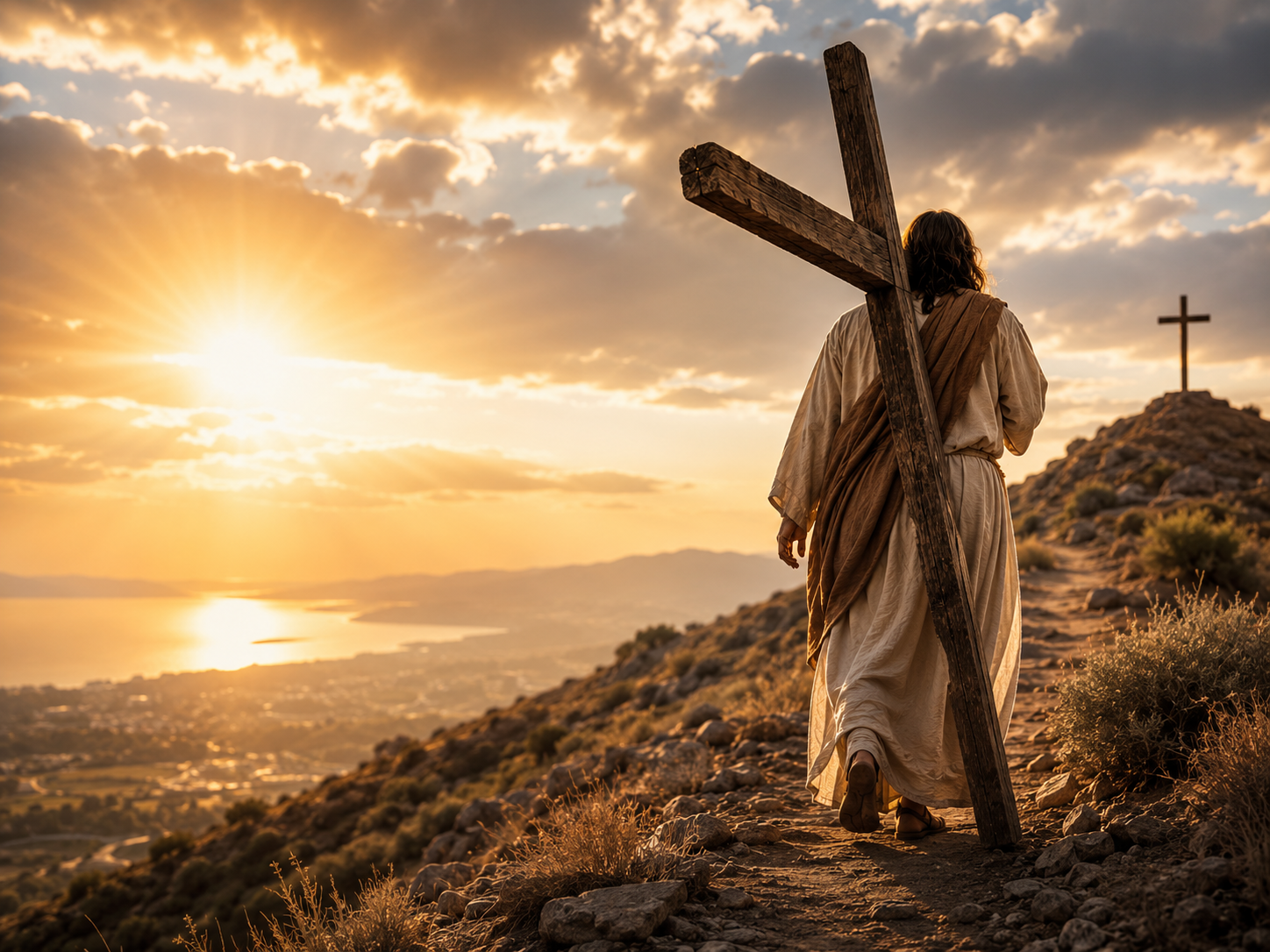
Jesus is talking about His solution to these things. He talks about the fire that He was going to bring on earth, the fire of His holiness and righteousness put in service to the Father’s justice and judgment. But in speaking about a “baptism” He will undergo, Jesus is also referring to the suffering He would endure on the cross in order to reconcile us to God and to one another. That’s the key. With Christ as the center of our lives, with His forgiveness as the key to our sense of self, with His words as the wisdom directing our words, and with His love as the motivation for our service, there can be real peace, reconciliation, diversity, and tolerance. But without Him at the center, our human-centered efforts toward peace, diversity, and tolerance are all temporary at best and, at worst, a sham.
Can the divisive Christ of our text also be the peace-giving Christ of the Scriptures? Yes, if you see His message not as some self-help, humanity-based proclamation for peace, but as a blood-bought, cross-earned message of peace and mercy offered as a free gift to you by grace through faith. When you see the cross, you see your Savior. His work on the cross overcomes the divisions of our sin, reconciles us to our heavenly Father, and, through repentance and faith, also bonds us to each other like nothing else can. The cross looks ugly, even divisive, but real unity and peace are found only there.
In Philip Yancy’s book, Disappointment with God, he relates a story where such ugliness brought real healing. It was about a family in Paraguay. The father, a doctor, spoke out against the military regime there and its human rights abuses. Local police took their revenge on him by arresting his teenage son and torturing him to death. He relates, “Enraged townsfolk wanted to turn the boy's funeral into a huge protest march, but the doctor chose another means. At the funeral, the father displayed his son's body as he had found it in the jail—naked, scarred from electric shocks, cigarette burns and beatings. All the villagers filed past the corpse, which lay not in a coffin but on the blood-soaked mattress from the prison. It was, in fact, the strongest protest imaginable, for it put injustice on grotesque display.”[1] That “proclamation” overcame incredible injustice and division.
Yancy goes on to say, “That’s what Christ’s cross does. The cross that held Jesus' body, exposed all the sin, violence and injustice of this world for what it is. At once, the cross revealed what kind of world we have and what kind of God we have: a world of gross unfairness but also a God of sacrificial love.”[2]The work of Jesus is the only thing that can ultimately unite and reconcile us to God and to one another, both now and forever. That’s really something to think about in today’s world.
PRAYER: Dear Lord Jesus, teach me the full weight of what You endured on the cross in order to overcome our divisions. Teach me to trust that when You divide and when You unite on Your terms, You always have my eternal best at heart. AMEN.

Today’s passage is Matthew 3:13-17, where the Bible says,
Then Jesus came from Galilee to the Jordan to be baptized by John. 14 But John tried to deter him, saying, “I need to be baptized by you, and do you come to me?” 15 Jesus replied, “Let it be so now; it is proper for us to do this to fulfill all righteousness.” Then John consented. 16 As soon as Jesus was baptized, he went up out of the water. At that moment heaven was opened, and he saw the Spirit of God descending like a dove and alighting on him. 17 And a voice from heaven said, “This is my Son, whom I love; with him I am well pleased.”
As 2025 ends, as faithful Lutherans, there is much to be thankful for as we have seen many positive developments for faith and freedom.
Pregnancy resource centers are booming while Planned Parenthood clinics are closing their doors. It looks like we are beginning to see a spiritual revival among young adults as they reject the emptiness of the culture they see around them. And several states have passed common-sense age verification laws, upheld by the U.S. Supreme Court, to protect innocent children from accessing graphic pornography online.
So, what is ahead for 2026? What policy advancements can we make to continue this positive momentum back towards faith and freedom?
Today’s passage is Luke 2:41-50, where the Bible says,
Every year Jesus’ parents went to Jerusalem for the Festival of the Passover. 42 When he was twelve years old, they went up to the festival, according to the custom. 43 After the festival was over, while his parents were returning home, the boy Jesus stayed behind in Jerusalem, but they were unaware of it. 44 Thinking he was in their company, they traveled on for a day. Then they began looking for him among their relatives and friends. 45 When they did not find him, they went back to Jerusalem to look for him. 46 After three days they found him in the temple courts, sitting among the teachers, listening to them and asking them questions…. 47 Everyone who heard him was amazed at his understanding and his answers. 48 When his parents saw him, they were astonished. His mother said to him, “Son, why have you treated us like this? Your father and I have been anxiously searching for you.” 49 “Why were you searching for me?” he asked. “Didn’t you know I had to be in my Father’s house?” 50 But they did not understand what he was saying to them.
Today is a dark day in the history of Illinois. Governor Pritzker—of whom every LCMS pastor in Illinois prays for each week and will continue to do so—signed into law . . . the “End-of-Life Options for Terminally Ill Patients Act,” granting terminally ill patients who have received a prognosis of six-months to live or less the ability to receive a pill in order to end their own lives.
Prayer Partner Thursday provides a month-long prayer emphasis in one of the four Lutheran Center for Religious Liberty areas of emphasis: Religious Liberty, Sanctity of Life, Educational Freedom, and Marriage as an Institution (family).
Today’s verses are Galatians 4:4-7, where the Bible says,
4 But when the fullness of the time came, God sent His Son, born of a woman, born under the Law, 5 so that He might redeem those who were under the Law, that we might receive the adoption as sons and daughters. 6 Because you are sons, God has sent the Spirit of His Son into our hearts, crying out, “Abba! Father!” 7 Therefore you are no longer a slave, but a son; and if a son, then an heir through God.
A blessed Christmas to all of you “for today (many years ago) in the town of David a Savior has been born to you; he is Christ, the Lord. This will be a sign to you: You will find a baby wrapped in cloths and lying in a manger” (Luke 2:11-12). The life, death and resurrection of Jesus came as a blessing to the world even though the world didn’t deserve it and, even worse, was unreceptive to receiving Him as the gift that He was for them (see John 1:10-13).
Today’s verses are Isaiah 35:3-4, where the Bible declares:
Strengthen the weak hands, and make firm the feeble knees. 4 Say to those who have an anxious heart, “Be strong; fear not! Behold, your God will come with vengeance, with the recompense of God. He will come and save you.”
We are slaves of Christ, but earthly slavery is not a good thing. Slavery is an institution of the fallen world. I am led to understand that even today there are fifty million people living as the property of others. I'm not sure what would happen if we added to that number those enslaved in various systems like North Korea. But bonds and fetters are not to be celebrated or commended, and if someone might say that it is a good thing, I have never seen anyone volunteer to be on slavery's receiving end. This is not to be a Pollyanna or to hide our heads in the sand. Throughout history, when one nation has conquered another, slavery has resulted. There will always be wars and rumors of wars, and life is messy. And yet slavery is not a good thing. And we can say so without losing sight of the fact that we as Christians are slaves of God, even as we are His children.
The dates identifying the LCRL bulletin blurbs are only suggestions. Please feel free to use any and all of the bulletin blurbs as your ministry needs allow.
The Bulletin Insert is designed to be printed and cut in half to fit conveniently inside a Sunday worship bulletin. Each month an insert will offer insight, encouragement, and information from the LCRL on the topics of Religious Liberty, Life, Marriage, or Education.
Today’s verses are Isaiah 35:3-4, where the Bible declares:
Strengthen the weak hands, and make firm the feeble knees. 4 Say to those who have an anxious heart, “Be strong; fear not! Behold, your God will come with vengeance, with the recompense of God. He will come and save you.”
[Weeks ago], a group from Concordia Theological Seminary, Fort Wayne, gathered on the sidewalk that runs by the local Planned Parenthood. There were perhaps 15 of us in all, but what a mighty and faith-filled people. A young couple, a father with three or four little ones in tow, a student from Germany, another from Australia.
What of it? Things change, and prayers are answered. Just as few predicted the fall of the Soviet Union and the crumbling of the Berlin Wall, we were supposed to think that Roe v. Wade was set in stone, a law surer than the Ten Commandments. Stare decisis, we heard ad nauseam. But in step six wise and courageous judges, and we got the Dobbs decision. Now, that didn't happen by accident. It was a matter of persistent. Persistent prayer, persistent marching, persistent lobbying and electioneering. Why bother? 60 million little ones who have lost their lives. And still counting.
Today’s passage is Matthew 3:1-2, where the Bible says,
In those days John the Baptist came, preaching in the wilderness of Judea 2 and saying, “Repent, for the kingdom of heaven has come near.”
America has changed dramatically since the 1950s and 1960s. Back then, in the years after World War II, it was a halcyon time for religion in this country. Christianity was assumed in society; it was the default setting. Christians were denominationally focused; fights largely occurred within the faith. Now, the threat comes not only from within but also from without, from secularists and zealots determined to belittle Christianity and, if it were possible, bring about its downfall.
The times we live in call for a different mentality and a different strategy. They call for Christians of all stripes to band together to fight an enemy that seeks to curtail our influence in society and even — it’s hard to avoid this conclusion — completely silence our voice in the civic sphere.
Prayer Partner Thursday provides a month-long prayer emphasis in one of the four Lutheran Center for Religious Liberty areas of emphasis: Religious Liberty, Sanctity of Life, Educational Freedom, and Marriage as an Institution (family).
Today’s Bible reading is Philippians 4:4-6 where the Apostle Paul says,
4 Rejoice in the Lord always. I will say it again: Rejoice! 5 Let your gentleness be evident to all. The Lord is near. 6 Do not be anxious about anything, but in every situation, by prayer and petition, with thanksgiving, present your requests to God.
Thanksgiving takes a lot of flak these days. Christmas haters are called “Scrooges” or “Grinches,” but haters of Thanksgiving are considered socially conscious and realistic. For many Americans, the fourth Thursday in November is an annoying holiday with racist origins — an excuse to force innocent citizens to gorge on poorly prepared, outdated foods while fraternizing with uncongenial relatives. It is, moreover, a day of hypocritical tension between trite demands to “be grateful” versus a Black Friday rush through the mall. Dismissively labeled “T-day” on social media, Thanksgiving is becoming mere no-man’s-land stuck between the two towers of Halloween and Christmas.
Today’s reading is Colossians 1:17-20 where the Bible says this of Jesus Christ:
17 And he is before all things, and in him all things hold together. 18 And he is the head of the body, the church. He is the beginning, the firstborn from the dead, that in everything he might be preeminent. 19 For in him all the fullness of God was pleased to dwell, 20 and through him to reconcile to himself all things, whether on earth or in heaven, making peace by the blood of his cross
Thanksgiving worship services, held at the request of the government, seem strange in modern America. Some American Lutherans have wondered if this is appropriate. Our government allows the murder of babies. How can its leaders ask us to pray and give thanks? Others have questioned whether or not the annual request itself is a violation of the separation of Church and State, and still others have suggested that it might be a misunderstanding of the two kingdoms.
The dates identifying the LCRL bulletin blurbs are only suggestions. Please feel free to use any and all of the bulletin blurbs as your ministry needs allow.
The Bulletin Insert is designed to be printed and cut in half to fit conveniently inside a Sunday worship bulletin. Each month an insert will offer insight, encouragement, and information from the LCRL on the topics of Religious Liberty, Life, Marriage, or Education.
Today’s reading is from the Old Testament Prophet Malachi and these portions of the first three verses of chapter 4.
1 “For behold, the day is coming, burning like an oven, when all the arrogant and all evildoers will be stubble... 2 But for you who fear my name, the sun of righteousness shall rise with healing in its wings…. 3 And you shall tread down the wicked, for they will be ashes under the soles of your feet, on the day when I act,” says the Lord of hosts.
Is it alright for Christians to be involved with politics?
The Bible contains no specific command that either requires or forbids Christian involvement with politics. However, through the prophet Jeremiah, God teaches His people that they should, “Seek the welfare of the city where I have sent you into exile, and pray to the Lord on its behalf” (Jer. 29:57). In other places, God teaches that Christians should obey and pray for those in positions of civil authority (Matt. 22:21; Rom. 13:17; Titus 3:1; 1 Pet. 2:13). These passages, together with the general biblical teaching that Christians should care for and promote the welfare of their neighbor, would suggest that Christians should participate in the process of deciding how we, as a nation, shall live.
Today’s reading is 2nd Thessalonians 2:14-15 where the Bible says,
14 To this he called you through our gospel, so that you may obtain the glory of our Lord Jesus Christ. 15 So then, brothers, stand firm and hold to the traditions that you were taught by us, either by our spoken word or by our letter.
Having lost their religion, they start a new one. Folks who no longer read their Bible, or believe it, begin to create substitutes. I just heard of some crazed figure predicting that the Lord would come back in September. Of course, he could have, or he might come in November, or in 1000 years, but no one knows the day or hour, only the Father. And yet, then later in the day I see a 1990 video of Meryl Streep warning us about global warming, and calamities that would come in a "very short time." By the year 2000, it would be too late. Since then, global warming has turned into climate change, but the apocalyptic fever still runs high with a fervor that would make a Bible belt Pentecostal blush.
Today’s Bible reading is Revelation 7:9–12 where the Apostle John recounts this vision of heaven:
9 After this I looked, and behold, a great multitude that no one could number, from every nation, from all tribes and peoples and languages, standing before the throne and before the Lamb, clothed in white robes, with palm branches in their hands, 10 and crying out with a loud voice, “Salvation belongs to our God who sits on the throne, and to the Lamb!” 11 And all the angels were standing around the throne and around the elders and the four living creatures, and they fell on their faces before the throne and worshiped God, 12 saying, “Amen! Blessing and glory and wisdom and thanksgiving and honor and power and might be to our God forever and ever! Amen.”
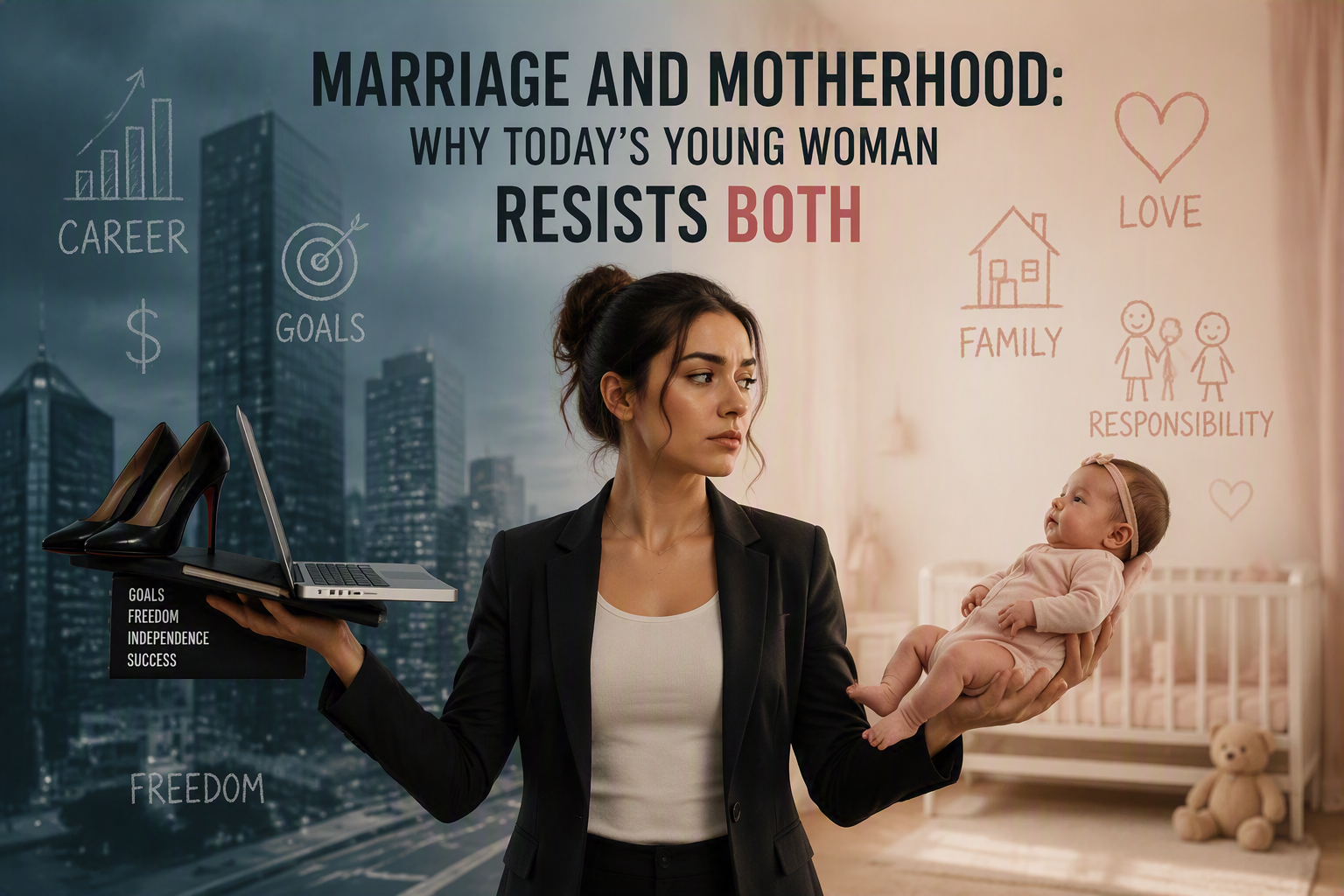
A good friend suggests that putting an end to gay marriage would be just another example of the nanny state, by which he means government overreach and intrusion into the private lives of our people. It's a cry for freedom from a libertarian point of view. In other news, I see that just 6 percent of Gen Z women think that personal success includes having children. Add to that the fact that a quarter of all children live in a home without dad. Add to that the fact that Senator Kaine, representative of many on the left, said that our rights come not from God but from government.
What to make of it? This summer I read The Communist Manifesto for the first time. Marxism is predicated on the idea that the state should have precedence over the family. Marxists see strong families as an obstacle to the state's influence. Homes are an example of private property, and family wealth promoted the practice of inheritance and intergenerational wealth. A traditional conservative says that God comes first, then family, and then the nation, which is not to be equated with the government. The Marxist seeks to put an end to all of that.
Prayer Partner Thursday provides a month-long prayer emphasis in one of the four Lutheran Center for Religious Liberty areas of emphasis: Religious Liberty, Sanctity of Life, Educational Freedom, and Marriage as an Institution (family).
Today’s reading is 2 Timothy 4:7, where St. Paul writes,
I have fought the good fight, I have finished the race, I have kept the faith.